When to arrive
Tap an hour. The hour decides whether this walk is pleasant or punishing, because the promenade has almost no shade and the river breeze only helps once the sun is off it.
What you pass along the way
The walk is made of short stretches rather than one attraction, and these are the pieces you move between.
Prioritise Luxor Temple at the southern end, because it is the one stop on the walk that is a destination in its own right and the promenade delivers you to its entrance. The rest are amenities or viewpoints you pass, and the ferry landing is mainly useful as a crossing point to the west bank rather than a place to linger.
What the river walk is like
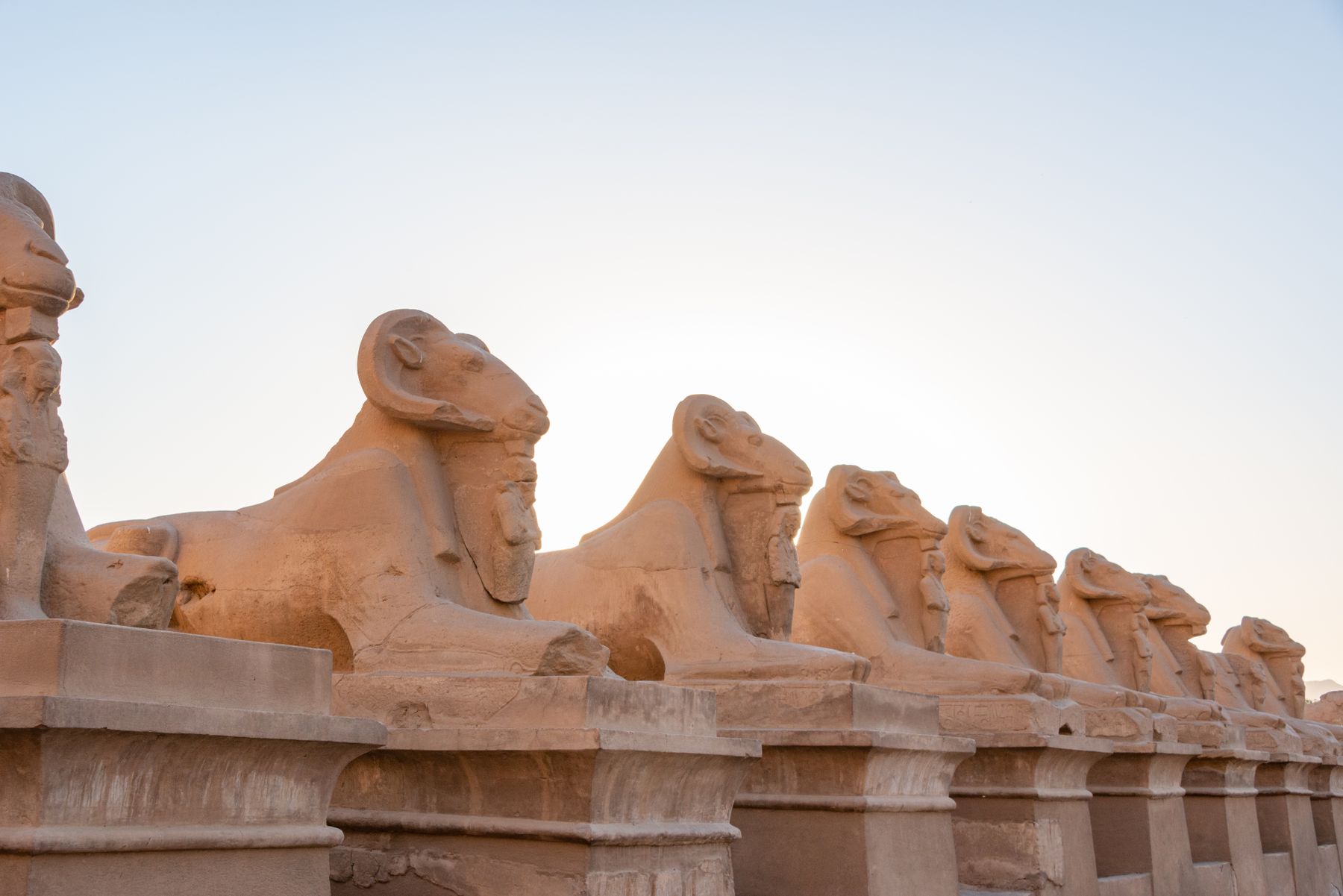
The Corniche al-Nil is the paved promenade along the east bank of the Nile at Luxor, running roughly from Luxor Temple north toward the Karnak approach. It is not a sight with a gate or a ticket. It is the strip of riverfront where the city meets the water, used by residents, ferry passengers, felucca crews and visitors at the same time. Walking it is the simplest way to understand how Luxor is laid out: the temples, the station and most of the hotels sit on this side, and the river does the rest.
The surface is flat and continuous, with a stone railing on the river side and a road behind it. Nile views open the whole way, and the west bank cliffs are visible across the water. Traffic on the road behind is constant, so the promenade is not silent. Benches face the river at intervals. The walk works in either direction, and you can join or leave it at several points rather than treating it as one fixed route from end to end.
Evening is when the promenade is busiest and most useful, because the heat drops and the ferries and feluccas are active. Midday in summer is exposed, with little shade along the railing. The promenade connects naturally to Luxor Temple at its southern end, which is why so many people walk it before or after a temple visit rather than as a separate outing. What is unknown is how much of the northern stretch toward Karnak is currently open or under repair; check locally on arrival, since the waterfront is maintained in sections.
Getting there and in
What people get wrong here
- Walking the whole length at midday: The promenade has little shade and the heat between Luxor Temple and Karnak can be draining. Break the walk or shift it to late afternoon.
- Expecting a quiet riverside path: The corniche is a working street with touts, coaches and ferry traffic. Keep valuables close and expect to be approached by felucca captains.
- Assuming the ferry runs all night: Public ferry hours change seasonally; check with your hotel or the landing for the last crossing. Missing it means a long detour or a private boat.
- Treating it as a temple visit: The corniche is a walk, not a monument, and the sights along it are separate ticketed sites. Plan the walk around those stops rather than expecting one continuous attraction.
- Wearing thin sandals: Some sections of pavement are uneven or broken, especially near the ferry landings. Closed shoes are more comfortable for the full length.
Combine it with
These are the places the promenade connects to most directly.
Questions
How long does the Corniche al-Nil walk take?+
Walking the full length between Luxor Temple and the Karnak approach takes around 40 to 60 minutes at an easy pace. Add time for stops at the ferry landing, the museum stretch and any felucca jetty. Most people do it as a one way walk and return by taxi or on foot later.
Is the corniche free to walk?+
Yes. The promenade is a public space with no ticket and no gate. The temples, museums and boats along it charge separately, and those prices change, so check the operator's own page for your date.
When is the best time to walk it?+
Late afternoon into early evening, when the heat eases and the river traffic is busiest. Sunrise is also good for quiet and light. Midday is the least comfortable because there is very little shade along the river side.
Can I catch the ferry to the west bank from the corniche?+
Yes, the main public ferry landing is at the Luxor Temple end of the corniche. Boats cross frequently during the day, and the crossing is short. Hours change seasonally, so check the landing or your hotel for the last boat.
What is there to see along the walk?+
The main sights are the river itself, the moored feluccas, Luxor Temple at the southern end and the Karnak approach at the northern end. The Luxor Museum sits just inland along the middle section. Each of these is a separate ticketed site with its own hours, so plan them as stops rather than part of the walk.
Is the corniche safe at night?+
The promenade is lit and busy in the evening, and locals use it after dark. As anywhere, keep to the lit sections, watch the uneven pavement, and keep valuables out of sight. For more general guidance see the safety page.