When to arrive
Tap an hour. The light and the temperature shift across the open courts through the day, and the morning and late afternoon slots are the ones most visitors can comfortably use.
What is inside the complex
The precincts and monuments below are the main stops, and they sit at different distances from the entrance.
Prioritise the Great Hypostyle Hall. It is the reason most people come, it sits close to the main axis so reaching it costs little walking, and it holds up even when the site is busy. The outlying precincts are for a second visit or a cooler day.
What a visit is like
Karnak is the largest temple complex in Egypt, and it is entered through the main ticket office on the East Bank, about three kilometres north of Luxor Temple, on the road that runs towards the airport. The gates open and close to a seasonal schedule, so check the operator's page for your date before setting out. Once inside, you choose your own route. Nothing is signposted as a single trail, and the site is wide enough that the first decision is simply which direction to walk.
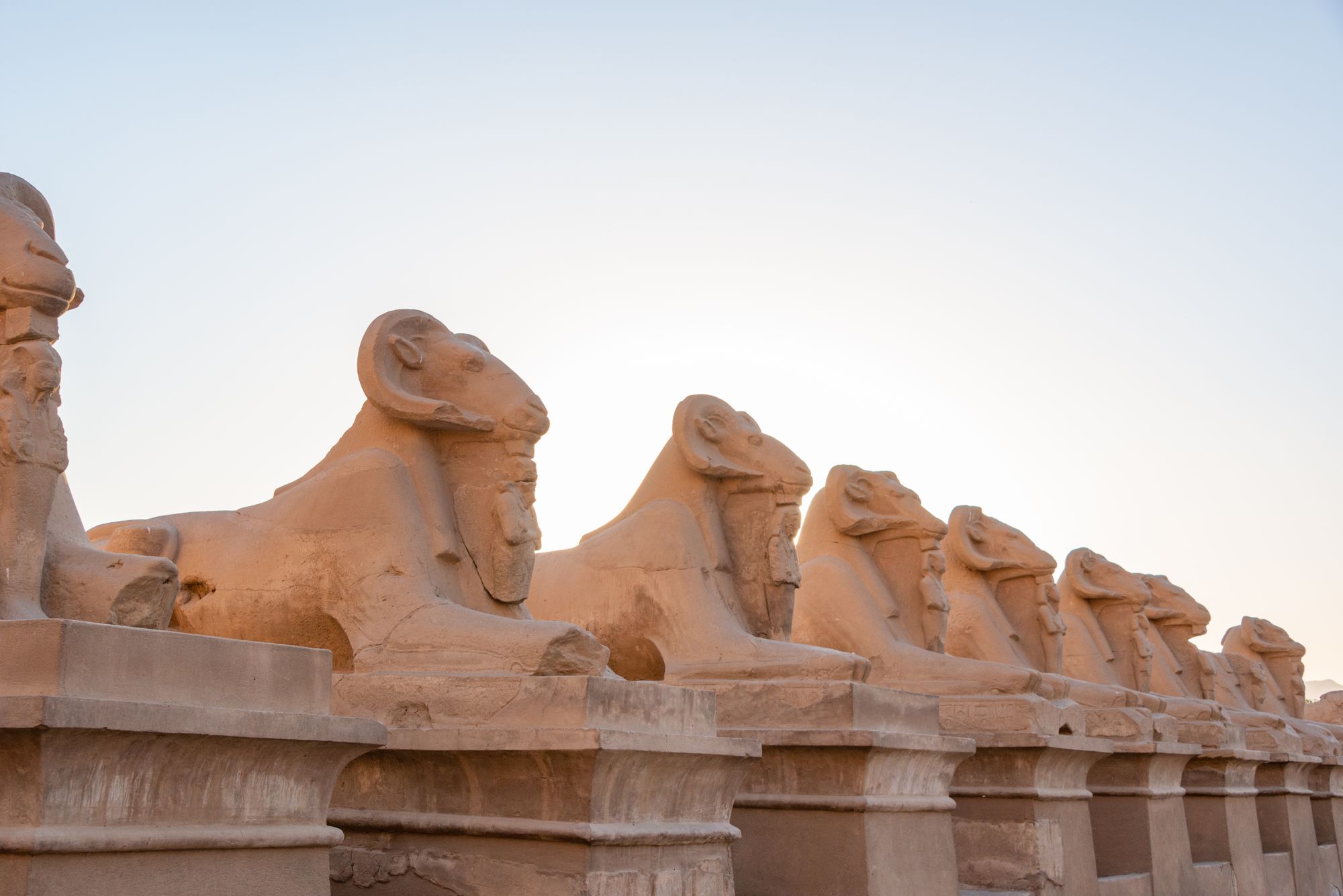
The centrepiece is the Great Hypostyle Hall in the Precinct of Amun-Re: a forest of columns that once carried a roof, with reliefs cut deep into the stone and light moving across them through the day. Beyond it stand obelisks, chapels built by successive kings, and a sacred lake. Separate tickets cover the open-air museum and the Precinct of Mut, and both are worth the extra step if you have the time and the heat tolerance.
Plan for two to three hours at minimum, more if you add the outlying precincts. There is little shade across the open ground, and midday in summer is punishing. Carry water, wear a hat, and choose shoes that handle uneven stone. The site is a working archaeological zone, so some areas close without notice. Budget your energy rather than trying to see every wall; a slower pass through the main precinct repays more than a rushed circuit of everything.
Getting there and in
What people get wrong at Karnak
- Trying to see every precinct in one go: Karnak is far larger than most visitors expect and the heat makes a full circuit tiring. Pick the main precinct first and add the smaller enclosures only if you still have energy.
- Arriving at midday in summer: The stone reflects heat and shade is limited, which cuts a visit short. Go at opening or in the last two hours before closing instead.
- Assuming the open-air museum is included: It needs its own ticket and the desk is not always obvious. Ask at the main ticket office before you walk in so you do not have to double back.
- Trusting an old guidebook for hours: Opening times change with the season and with local arrangements. Check the operator's own page or the ticket office for your date rather than relying on a printed listing.
- Walking from Luxor Temple without planning the return: The distance is manageable but the road is busy and hot, and taxis at the Karnak gate thin out near closing. Arrange your return before you go in or agree a pickup point.
Combine it with
The East Bank is compact, so a visit here pairs naturally with the sites along the same stretch of road.
Questions
How long should I allow for Karnak?+
Two to three hours covers the main precinct and the Hypostyle Hall at an unhurried pace. Add an hour or more if you want the open-air museum and the smaller enclosures, and more again in hot weather when you will want to sit in the shade.
Is Karnak on the East or West Bank?+
Karnak is on the East Bank, on the northern edge of Luxor city. It pairs naturally with Luxor Temple and the corniche, both a short drive south.
Do I need a separate ticket for the open-air museum?+
Yes, the open-air museum is ticketed separately from the main precinct. Buy it at the main ticket office if you want to include it, since it is easy to miss otherwise.
What is the best time of day to visit?+
The first hour after opening and the last two hours before closing are the calmest and the coolest. Midday is hot and crowded, especially in summer, so plan around it if you can.
Can I walk from Luxor Temple to Karnak?+
The two are linked by the Avenue of Sphinxes and the distance is walkable for a fit visitor, though the road is busy and exposed. Many people take a taxi or minibus one way and walk part of the avenue instead.
What should I combine with Karnak?+
Luxor Temple and the corniche are the closest pairings on the East Bank. If you have a full day, the Luxor Museum and the Mummification Museum fill the middle of the day when the temples are hottest.