When to arrive
Tap an hour. After dark the temple is lit and the stands of columns read very differently from the way they do in flat daylight.
What to see inside
The temple runs in one line, so most of these come in the order you meet them walking in from the Corniche.
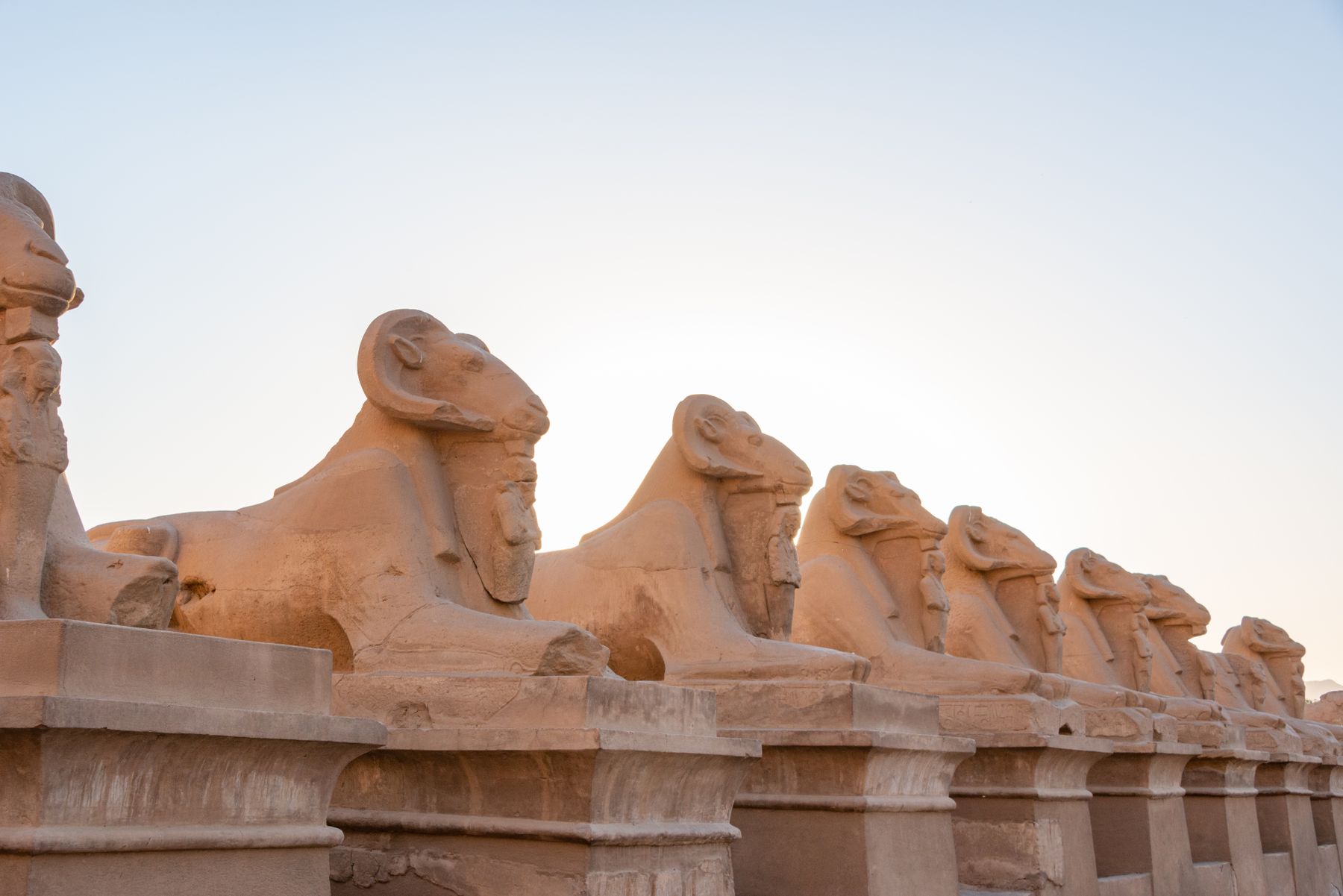
Prioritise the Avenue of Sphinxes. It is the part most people cut short because it sits outside the gate, and it is what connects this temple to Karnak and explains why the two are read as one site. Give it a walk, not a photograph from the entrance.
What a visit is like
Luxor Temple sits inside the city rather than out in a field, so the approach is a walk along the Corniche al-Nil or a short ride from the centre. The first thing that registers is the scale of the pylon and the way the temple runs back toward the colonnade in a long axis. Entry is ticketed, sold at the gate or through official channels, and the site is easy to pair with Karnak and the city centre on the same day.
Beyond the first pylon the Court of Ramesses II opens out, with the colonnade of Amenhotep III leading deeper in and the Court of Amenhotep III behind it. The Graeco-Roman decoration at the Chapel of Serapis and the mosque of Abu Haggag built above the ruins are the parts most first-time visitors do not expect. The Avenue of Sphinxes runs away toward Karnak and is worth walking a stretch of rather than just glancing at from the gate.
Allow roughly one and a half to two hours, longer if the light is good and you keep stopping. The reason to come late is that the temple is lit after dark and stays open into the night, which changes what you can read on the stone. Hours change seasonally, so check the operator's page for your date. Do not treat this as Karnak's equal in size: it is smaller and denser, and the later layers are the point.
Getting there and in
What people get wrong here
- Only visiting in daylight: The artificial lighting after dark is the main reason Luxor Temple stands out from other temples in the city, and many visitors miss it by going only in the morning. If you have the choice, go late in the day and stay for the lights.
- Expecting Karnak's scale: Luxor Temple is much smaller and more urban, hemmed in by the city, so it reads differently. Plan it as a shorter visit and put the larger walking distances into a Karnak day instead.
- Skipping the Avenue of Sphinxes: The processional road is easy to treat as an approach rather than a sight. Walk at least part of it, since it explains how the temple related to Karnak.
- Arriving without checking hours: Seasonal opening changes and occasional closures for events happen, and turning up on the wrong evening wastes a trip across the city. Check the operator's page for your date before you set out.
- Ignoring the later layers: The Roman shrine and the mosque built into the temple are often walked past. They are part of why the site survived, and reading them takes only a few extra minutes.
Combine it with
Most of what pairs with Luxor Temple is a short walk or ride away.
Questions
Is Luxor Temple worth visiting?+
Yes, mainly because it is the major monument in the city that is open into the evening, so it works when the West Bank sites have closed. It is smaller than Karnak but more central, which makes it easy to fit around other plans. Allow an hour and a half to do it properly.
How long does Luxor Temple take?+
About 1.5 to 2 hours at an unhurried pace, including the open court and the colonnade. A quick circuit is under an hour. Add time if you want to walk the Avenue of Sphinxes or stay for the evening lighting.
What are the opening hours?+
Hours change seasonally and can shift for events, so no fixed time is reliable here. Check the operator's own page for your date before you travel across the city. Evening opening is the reason many people choose this temple over others.
Is Luxor Temple open at night?+
It is known for evening opening under artificial light, which is a different experience from the daytime visit. Whether it opens on a given evening depends on the season and the operator's schedule. Confirm before you go.
Do I need a guide?+
Not strictly, but the site has several layers from different periods that are easy to walk past without explanation. A guide or a good written guidebook helps with the Roman and Islamic reuse in particular. Independent visitors can still see the main elements in an hour.
How do I get to Luxor Temple?+
It is in the city centre on the East Bank, walkable from the Corniche al-Nil and most central hotels. From the West Bank, take the public ferry and walk from the landing. Taxis are easy to find on this side of the river.