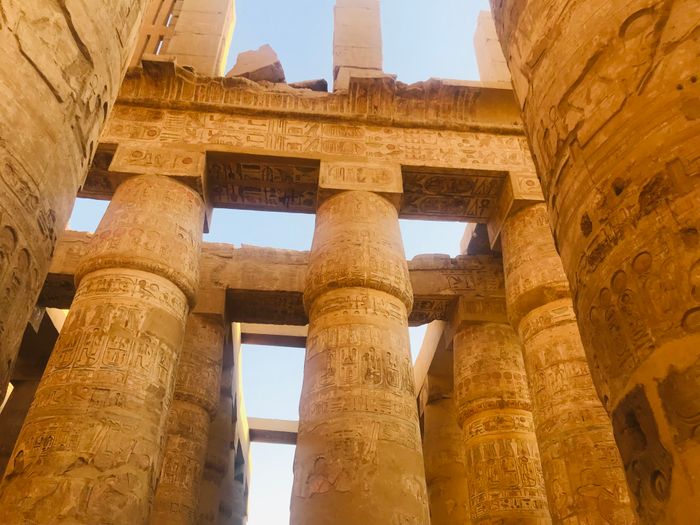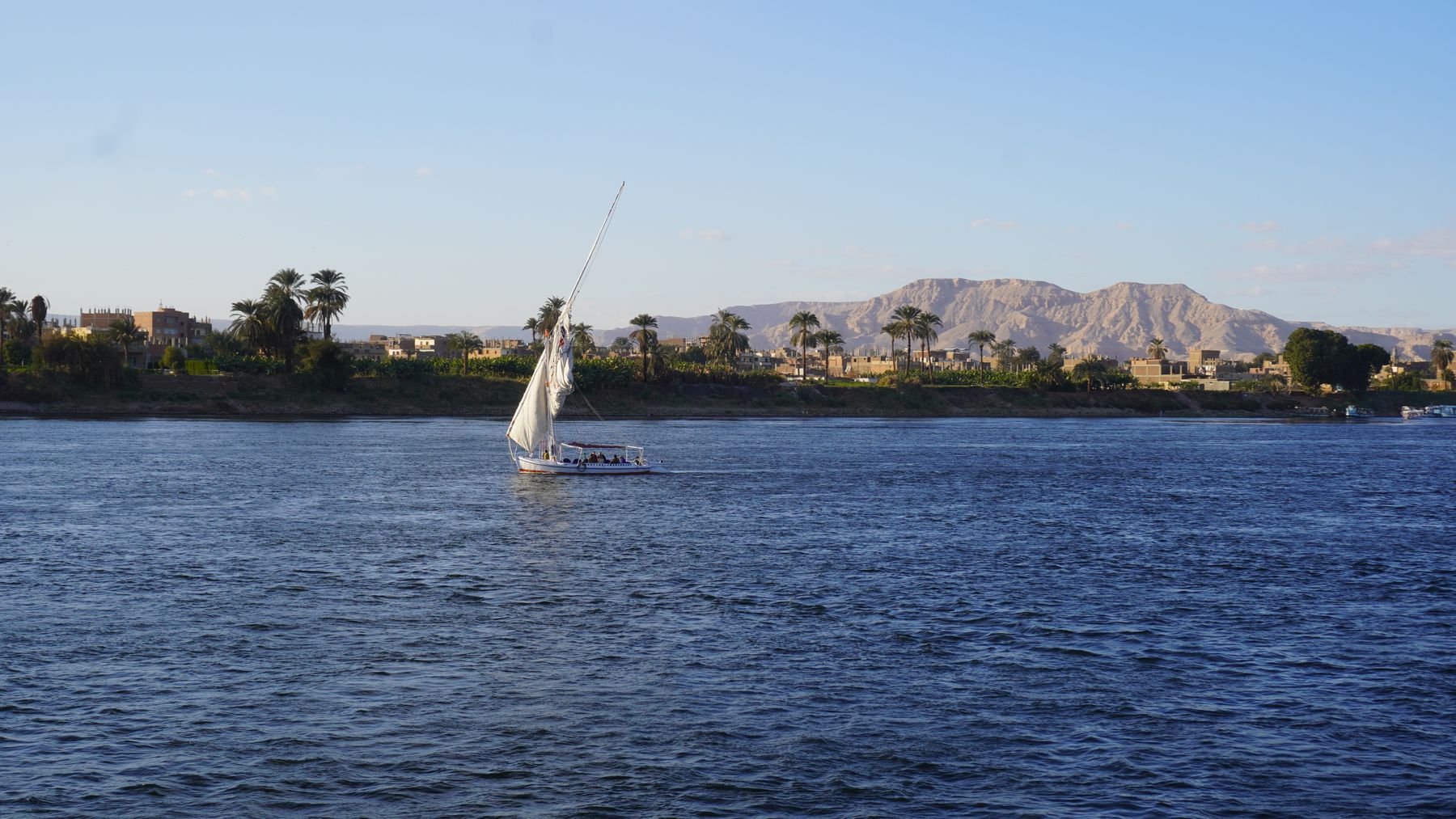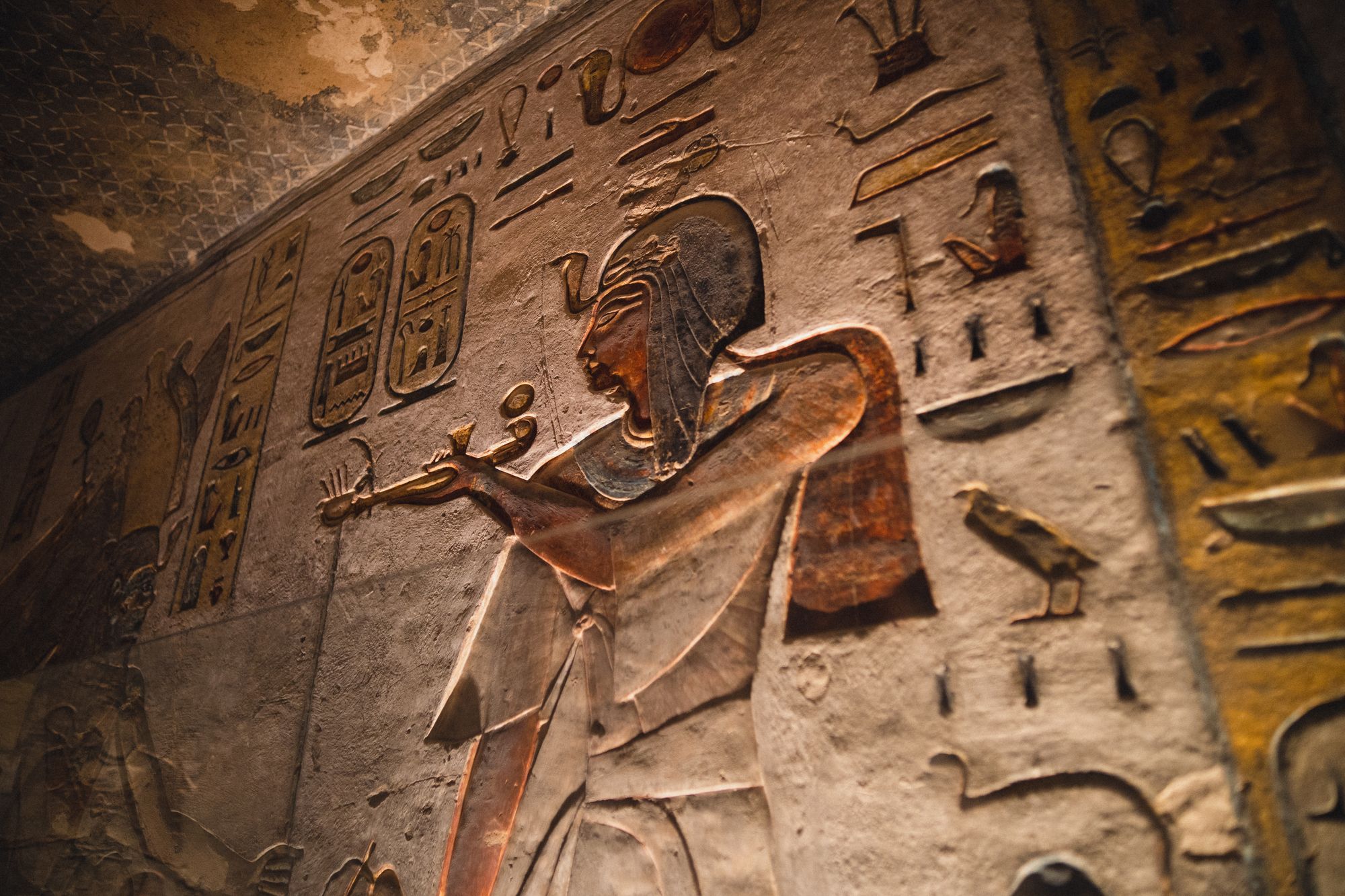
Start at Karnak Temple Complex in the early morning, then walk the Avenue of Sphinxes southwest to Luxor Temple. From there, follow the Corniche al-Nil north to Luxor Museum, then cut inland to the Mummification Museum and Luxor Souq. This route runs roughly south to north, keeps the Nile on your left, and places the largest site first while it is cool. Hours change seasonally, so check each site's operator page for your date.
Why the route runs south to north
The East Bank rewards a single line rather than a series of out and back trips. Karnak sits at the northern end of the Avenue of Sphinxes, Luxor Temple at the southern end, and the Corniche al-Nil runs between the temple and the river. Walking southwest from Karnak to Luxor Temple puts the largest site first, when the air is still cool and the coach groups have not yet arrived. Turning north along the Corniche afterwards means the Nile stays on your left and the museum, the Mummification Museum and the souq fall in sequence without a single retraced step.
The geometry matters more than the distances. The Avenue of Sphinxes is a straight, shaded approach that links the two temple complexes, so it does the work of a transport leg while remaining the visit itself. The Corniche is open and exposed, best kept for the middle of the morning rather than the afternoon. The inland blocks between the river and the souq are compact and walkable, which is why the Mummification Museum and the market can be paired at the end. Hours change seasonally, so check each site's operator page for your date before fixing the order.
Ways to run the East Bank
The options below differ mainly in direction, time of day and how much of the route you take on foot.
The walk in four stages
Follow these in order and you cover the East Bank without retracing a single street.
Three things to walk away from
What each leg actually involves
Karnak Temple Complex opens earliest and takes the longest. Allocate the bulk of your morning here, because the site is large and the walking inside it is substantial. The Avenue of Sphinxes then runs southwest for roughly three kilometres to Luxor Temple, a straight paved route with the sphinxes on both sides. There is little shade, so a hat and water matter. Luxor Temple sits at the southern end, close to the Corniche al-Nil, and is the natural point at which to turn north rather than double back. Allow time to sit before continuing.
From Luxor Temple, follow the Corniche al-Nil north to Luxor Museum. The pavement runs along the river and the museum entrance is set back from the road. After the museum, cut inland: the Mummification Museum and the souq sit a short block or two from the Corniche, and the two combine well as a final loop. The souq is busiest in the evening, so arriving late afternoon gives you the choice of finishing there or returning after dinner. None of these legs is long in isolation, but together they fill a full day.
Carry more water than you think you need, because the Avenue of Sphinxes and the Corniche have almost no shade or vendors. Toilets are scarce along the route; the museums and the larger hotels on the Corniche are the reliable options. Start early enough that you reach Luxor Temple before the heat peaks.
When not to walk this route
Midday is the wrong time for the whole route. Between roughly late morning and mid afternoon the Avenue of Sphinxes and the Corniche have almost no shade, and the heat on the open paving is the main reason people abandon the walk halfway. If your only free day begins at noon, reverse the logic: start with the museums, which are indoor and air conditioned, and leave Karnak and the Avenue for the following morning. A short walk in the wrong hours is worse than a long one in the right hours, and the sites do not move.
The route also fails on Fridays, when the souq and some smaller sites keep different hours, and during Islamic holidays, when opening times shift without much notice. Check the operator pages for your date rather than relying on a pattern. If you are staying on the West Bank, this walk is still possible, but treat the ferry as a separate leg and do not fold it into the route; the crossing adds time and the East Bank walk starts properly only once you are on the eastern side.
Questions
How long does the East Bank walk take?+
The full Karnak to souq route covers roughly five to six kilometres and takes most of a day if you enter the temples and museums. Walking without entering sites takes about ninety minutes to two hours at a steady pace. Add time for heat, queues and the occasional wrong turn near the Corniche. For a timed plan, see the East Bank overview.
Is the Avenue of Sphinxes walkable all the way?+
The Avenue of Sphinxes is paved and open for walking between Karnak and Luxor Temple, though some sections run beside roads with traffic. There is little shade, so early morning or after dark is easier. Check locally whether any section is closed for restoration on your date, as this changes. The Karnak Temple Complex page covers the starting point.
What should I see first on the East Bank?+
Karnak first, because it is the largest site and the heat builds through the morning. Then walk to Luxor Temple, which is smaller and closer to food and transport. Save the museums and souq for the afternoon or evening. Luxor Temple details are on its own page.
Can I do this walk with children?+
Yes, but shorten it. Do Karnak in the morning, then take a taxi or caleche to Luxor Temple rather than walking the full Avenue. The Corniche is stroller-friendly in parts, while the souq alleys are not. A family itinerary with pacing options is available.
Where does the walk end for food and drink?+
The route ends near the Luxor Souq and Al-Sahaby Lane, where there are cafes and restaurants. The Corniche al-Nil also has hotel terraces and river-view spots along the way. Hours and closing days vary, so check the operator's page for your date. See the Al-Sahaby Lane and Aboudi page for one cluster of options.