Stay Luxor Find a stay
Luxor Temple colonnade lit at dusk beside the Nile
Itinerary · 9 min read · checked Sep 2026

One Week in Luxor, Hour by Hour

A seven day schedule that splits the two banks, puts the big sites at dawn and keeps the afternoons for what most itineraries skip.

Start with day one Book these first
The Nile, with the East Bank for city and temples, the West Bank for tombs
How Luxor divides
Seven days, two of them structured hour by hour here and the rest mapped to the same rhythm
Time this covers
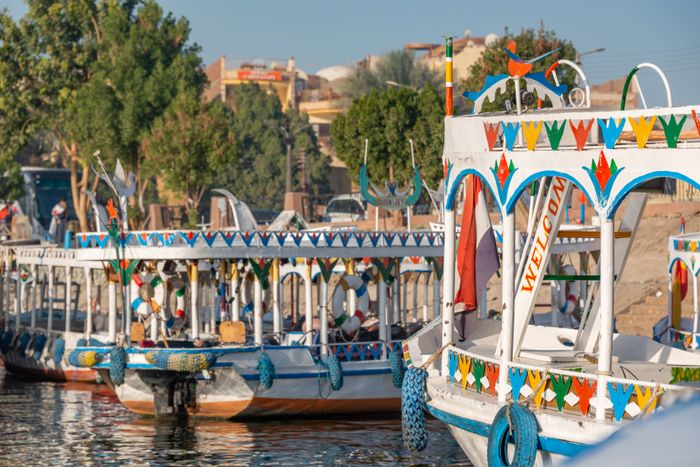
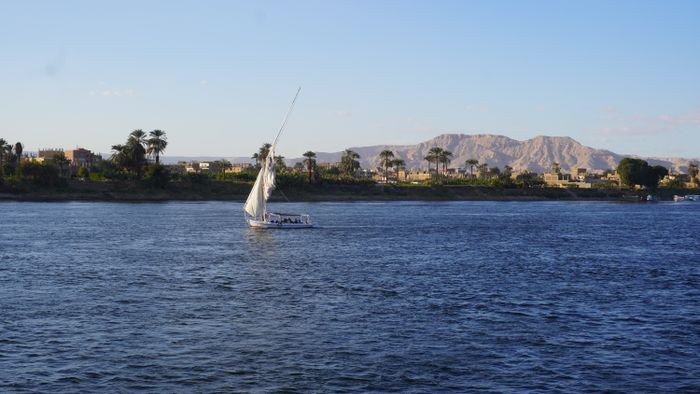
Public ferry every few minutes, private boats on demand, and a road bridge south of the city
River crossings
Summer heat pushes the workable window earlier; winter opens the middle of the day
Season effect

Book these before you arrive

Three things are worth sorting in advance. Everything else in Luxor can be arranged the night before, or on the day.

Fix your bank base Decide whether you are staying on the East Bank or the West Bank, because it changes every morning and every evening of the week. The East Bank puts the station, most restaurants and both city temples within walking distance of each other.
Check opening hours for your dates Temple and tomb hours shift with the season and with individual site closures, and the Valley of the Kings rotates which tombs are open. Check the operator or the site page for your specific date rather than a general listing.
Decide on a West Bank vehicle The West Bank sites are spread out and not walkable between each other in the heat. Arrange a car and driver for the day, or plan the balloon and the ferry crossings around a fixed pickup.
Book the balloon early Balloon flights over the West Bank run at first light and depend on wind, so they can be grounded at short notice. Book for an early day in the week so a cancelled flight can be rebooked before you leave.

The two days, hour by hour

West Bank at dawn, indoors through the heat, Karnak in low sun and the temple lit after dark.

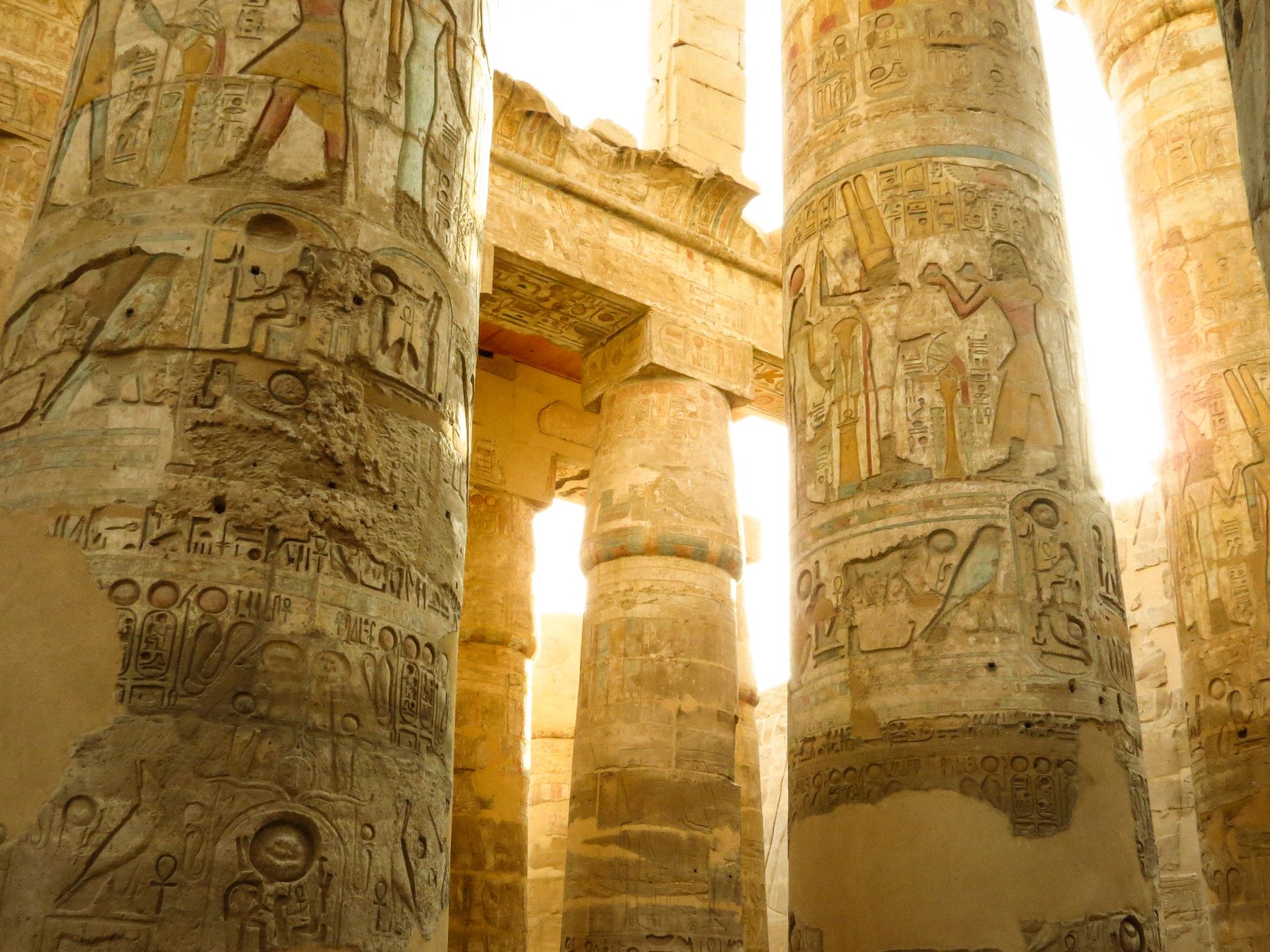
06:20 Karnak at opening Arrive as the gates open, because the hypostyle hall and the open courts have almost no shade and the tour groups land mid morning. Work from the first pylon inward and leave the sacred lake for last.
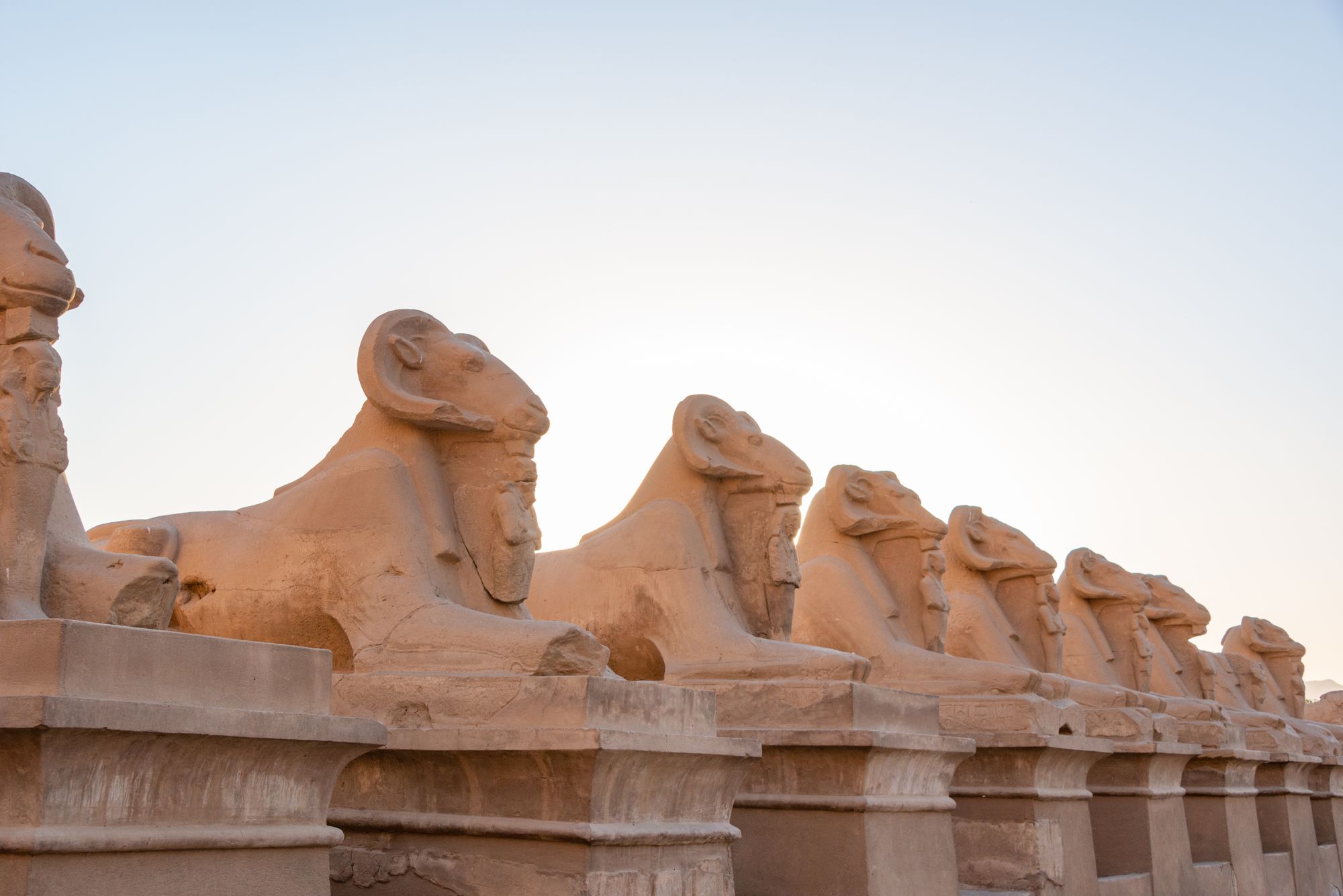
09:00 Avenue of Sphinxes Walk the reconstructed processional route that once linked Karnak to Luxor Temple, in the cooler end of the morning. It is a long straight line, so turn back whenever you have had enough rather than committing to the whole length.
11:00 Luxor Museum The middle of the day is the right time for a museum, since it is indoor and air conditioned. The collection is small and well labelled, which makes it a good first pass at the material you will see in situ later in the week.
13:00 Lunch in the city center Eat on the East Bank near the corniche, where the largest cluster of restaurants sits. Upper Egyptian dishes are the thing to order here rather than international menus.
15:00 Luxor Souq The market is liveliest in the late afternoon and early evening, so this is a browse rather than a buying stop. Prices are negotiable and there is no fixed rate, so decide what you are willing to pay before you start.
17:30 Luxor Temple at golden hour The temple sits inside the modern city and is lit after dark, which makes late afternoon into evening the strongest slot. The columns and the seated colossi read better in low light than at midday.
19:00 Corniche al-Nil walk The riverside promenade runs the length of the East Bank and is busiest after sunset. It is the easiest place to get your bearings on where the ferry lands and how the two banks sit relative to each other.
20:00 Dinner on the East Bank Keep the first night simple and close to your hotel, because the next morning starts before dawn. Al-Sahaby Lane and Aboudi sit in the same central area and cover both a sit down meal and a bookshop cafe.

If your two days look different

If you are travelling with children or in summer heat Move every outdoor start half an hour earlier and cut the afternoon site to one. Build in a hotel pool or an air conditioned museum slot each day instead of a second monument.
If you are here primarily for temples and tombs Drop the market, the corniche and the restaurant stops and add the Ramesseum, the Valley of the Queens and a return to Karnak. Two visits to Karnak at different hours covers far more than one long one.
If you want the week to include a day outside Luxor Give a whole day to Dendera or Edfu rather than trying to fold either into a West Bank morning. Both are separate journeys and Esna sits in the same direction as Edfu.

What we would drop first

Two days is enough only if you are willing to leave things out. In the order we would cut them:

  1. The Avenue of Sphinxes walk: Drop it first if the morning runs late, since the reconstruction is the least ancient section of the route.
  2. The Colossi of Memnon: It is a road stop rather than a site, so skipping it costs you very little beyond the photograph.
  3. One of the two West Bank tomb groups: Doing both Nobles and Deir El Medina in one afternoon means rushing the painting you came for.
  4. Luxor Museum: If you have already spent a full day at Karnak and Luxor Temple, the museum is the most repeatable item on the list.

Questions

Which bank should I stay on for a week?+

The East Bank suits a first trip because the station, the restaurant cluster and both city temples sit on one side, and the corniche makes the evenings easy. The West Bank suits anyone whose priority is tombs and who wants to be at the sites before the crossings fill up. The trade off is that West Bank evenings are much quieter and the ferry timetable shapes your day.

Where to Stay in Luxor →

How do I get between the two banks?+

There is a public ferry that runs every few minutes, private boats that cross on demand, and a road bridge south of the city. The ferry is the shortest crossing and lands close to both the corniche and the main West Bank road. Which one makes sense depends on whether you have a vehicle waiting on the far side.

Getting Around Luxor →

When in the year should this week be scheduled?+

Summer compresses the usable outdoor hours into the early morning and late afternoon, which changes the shape of every day in this plan. Winter opens the middle of the day but brings the largest crowds to the Valley of the Kings and Karnak. Hours also shift seasonally at individual sites, so check the operator's page for your date.

When to Visit Luxor →

Do I need a guide or a car for the West Bank?+

The West Bank sites are spread out and the distances between them are not pleasant on foot in the heat, so a car and driver for the day is the usual arrangement. A guide is a separate question and depends on how much you want explained on site. Neither is required for the East Bank, where the temples and the museum sit close together.

Getting Around Luxor →

What should I know about money and tipping before I go?+

Tipping is expected across a wide range of interactions, from drivers and guides to bathroom attendants, and it is worth understanding the conventions before you arrive rather than working it out under pressure. Cash is used far more than cards outside hotels and larger restaurants. The customs are specific enough that they are worth reading up on in advance.
Money and tipping in Luxor →

Guides that pair with this one

All guides →

Two days works. Book the right side of the river.

East Bank, walking distance from the temples and the ferry landing.

Search stays Compare the areas