When to arrive
Tap an hour. Medinet Habu has little shade in the open courts, so the hour you choose changes how much of the relief you can comfortably read.
What to see inside
The temple rewards a slow walk from the first pylon to the rear rooms, with several stops that are easy to miss.
The second court and hypostyle hall are the priority, because the reliefs there are the best preserved and the space gives the clearest sense of how the temple worked. If time is short, go there first and work outward.
What the visit is like
Medinet Habu sits at the southern end of the West Bank, past the Colossi of Memnon and the turn for the Valley of the Kings. Most drivers know it, but fewer visitors ask for it, so the site often runs quieter than the temples further north. The main structure is the mortuary temple of Ramesses III, and it stands inside a fortified enclosure with mudbrick walls that still rise to a noticeable height in places.
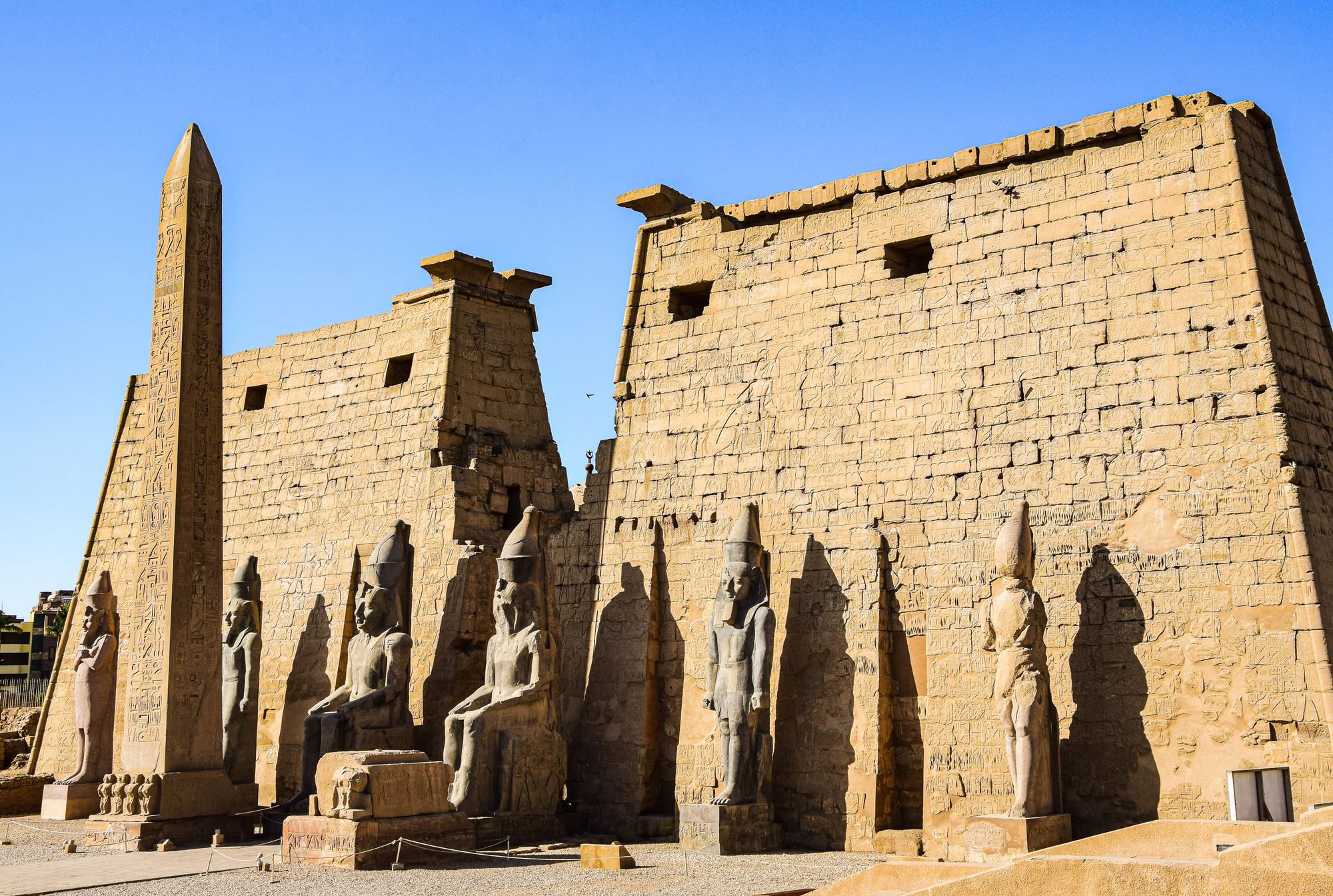
You enter through the first pylon, a massive gateway whose towers carry sunken reliefs of the king smiting enemies and lists of conquered peoples. Beyond it lies the first court, then the second court with its pillars and the hypostyle hall behind. The decoration is dense and well preserved in places, with colour still visible on some ceilings and under overhangs, and the scale is large enough that a slow walk through takes time.
The temple was not abandoned after the pharaohs. It was used as a settlement, a church, and a village at different periods, and those layers are still visible in the stone. That long use is what makes it feel different from a purely archaeological site, and it is the reason to give it more than a quick stop. The site is open during daylight hours, and those hours change seasonally, so check the operator's page for your date.
Getting there and in
What people get wrong here
- Treating it as an optional extra: Medinet Habu is often skipped in favour of the Valley of the Kings and Hatshepsut, which is a shame because the reliefs here are clearer and the site is far less crowded. Build it into the day rather than deciding at the last minute.
- Arriving at midday in summer: The courts are exposed and the heat between the walls is real, which makes the carvings hard to enjoy. Go early or late if you can, and save the indoor or shaded parts of your day for the middle.
- Rushing the second court: The first court is where most groups stop, and the second court and hypostyle hall are where the best carving is. Allow at least half an hour beyond the entry court or you will miss the reason to come.
- Expecting the same experience as Karnak: Medinet Habu is smaller and quieter, and it rewards close looking rather than scale. If you arrive expecting Karnak, you will read it as underwhelming rather than as the well-preserved, layered site it is.
- Assuming the sound and light show is included: The evening show is a separate event with its own tickets and schedule, and the language and timing vary. If you want it, book or ask ahead rather than turning up on the night.
Combine it with
Medinet Habu sits within a short drive of several other West Bank sites, so it can be combined with them in a single day.
Questions
Is Medinet Habu worth visiting?+
Yes, particularly if you care about relief carving and want a West Bank temple that is not overrun. It is one of the best-preserved complexes on the West Bank, and the military and religious scenes on the walls are unusually clear. It also works well as a contrast to the tombs and the larger temples.
How long does Medinet Habu take?+
Most visitors spend between ninety minutes and two hours, depending on how closely they look at the walls. If you add the outer gate and the back of the complex, allow closer to two hours. It is a reasonable half-day stop rather than a full day on its own.
When is the best time to visit Medinet Habu?+
Early morning or late afternoon, when the light is lower and the site is quieter. Midday is hot and busy, especially in the high season, and the open courts offer little shade. Check the operator's page for current opening hours before you plan the rest of the day.
How do I get to Medinet Habu from Luxor?+
It is on the West Bank, so you cross the river and continue by road, usually by taxi or with a driver for the day. It sits past the Colossi of Memnon and the Ramesseum, near the villages at the southern end of the monument strip. Public transport does not go directly to the gate.
What should I combine with Medinet Habu?+
The Ramesseum, the Valley of the Queens and Deir el-Medina are all in the same general area and fit naturally into one West Bank day. The Colossi of Memnon are on the way and take only a few minutes. Trying to add the Valley of the Kings as well usually makes for a long, hot day.
Is Medinet Habu accessible?+
The main courts are on level ground but the surfaces are uneven stone and sand, and some areas are stepped or narrow. There is no lift or special route, so anyone with limited mobility should plan for a slower visit. Ask at the ticket office about the easiest path in.