When to arrive
Tap an hour. The hour matters because the valley has little shade, a midday closure and a rotating set of open tombs, so early or late changes what you actually see.
What is inside the valley
The list below covers the tombs, the viewing point and the practical stops between them.
Prioritise the separately ticketed tombs if the budget and the day allow, because they are the largest and most completely painted, and the general ticket group changes without notice, so you cannot rely on a particular one being open.
What the visit is like
The Valley of the Kings is a dry, pale bowl of limestone on the west bank at Luxor, cut by narrow paths and dotted with grated tomb entrances. You arrive by road from the river or the ferry landing, usually in a taxi or a car arranged through a hotel. From the gate, a shuttle or a short walk takes you to the first cluster of tombs. The scale is smaller than the pyramids and easier to read: you are here to go underground, not to look up.
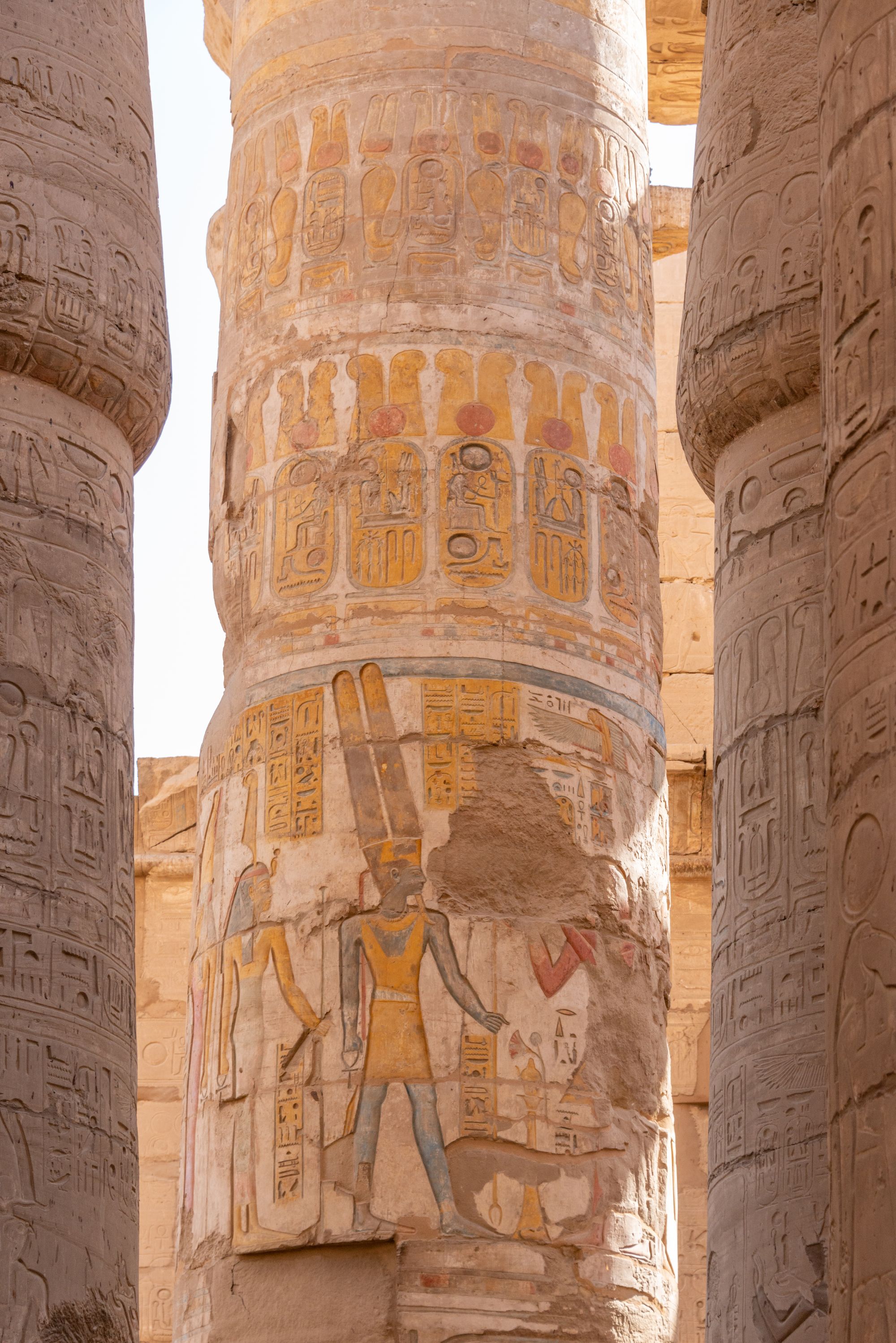
Inside, the air cools and the walls close in. Corridors and chambers carry painted plaster and carved relief: figures of the king with gods, the journey of the sun through the underworld, star ceilings, and in some tombs a burial chamber with a stone sarcophagus. Colour survives where the rock held and the air stayed dry. The general ticket opens a rotating group of royal tombs, while a few major burials, including Tutankhamun and Seti I, need their own tickets.
Hours change seasonally, so check the operator's page for your date before you set out. The site is open in two broad bands, morning and afternoon, with a midday closure. Shade is scarce and the paths are unshaded, so the cool hours matter more here than at most Luxor sites. Photography rules vary by tomb and are posted at each entrance; some custodians ask for a camera pass and some tombs forbid photography entirely.
Getting there and in
What people get wrong here
- Treating the general ticket as covering everything: The biggest and best preserved chambers are on separate tickets, so a visitor who buys only the general entry can leave without seeing the tomb they came for. Decide before you go which separate ticket, if any, is worth it to you.
- Arriving in the middle of the day: Heat and coach groups peak together, which makes the unshaded walk between tombs the worst part of the visit. Opening time or the last couple of hours are the better slots.
- Wearing sandals or thin shoes: The paths are uneven and the tomb floors and ramps can be slick. Flat shoes with grip make the visit easier and safer.
- Assuming a particular tomb will be open: Tombs rotate in and out of the open list for conservation, so a specific chamber cannot be promised. Check the board at the gate on the day and be ready to substitute.
- Rushing the walk to fit in more tombs: The distance between entrances is longer than it looks and the heat takes a toll. Fewer tombs seen properly beats a full list seen while overheated.
Combine it with
The west bank keeps its other monuments within a short drive of the valley.
Questions
How much time should I allow for the Valley of the Kings?+
Most visitors spend two to three hours on site including the walk between tombs and the climb to the viewing point. Add time if you are buying separate tickets for the larger chambers. The heat and the slopes are what stretch the visit, not the tombs themselves.
Is the Valley of the Kings worth it?+
For the painted royal burial chambers, yes, and it is the main reason many people come to Luxor. The experience depends heavily on which tombs are open and whether you take a separate ticket for the best preserved ones. If painted tombs are the priority, plan the visit around that and not around the general entry alone.
How do I get to the Valley of the Kings from the East Bank?+
Cross the river by ferry or bridge and continue by road on the west side, usually by taxi or a car arranged for the day. The valley is above the cultivation and the final approach is uphill. Many visitors combine it with other west bank sites in a single loop.
What should I combine with the Valley of the Kings?+
The west bank sites sit close together, so the temple at Deir el-Bahari, Medinet Habu and the Tombs of the Nobles all work as part of the same day. Trying to add east bank temples to the same day usually means rushing both. Pick two or three west bank stops and do them properly.
Can I take photographs inside the tombs?+
Photography inside tombs is restricted and a permit may be required, with rules varying between tombs. The position changes, so ask at the ticket office before you assume anything. Flashes and tripods are commonly limited even where photography is allowed.
When is the best time of year to visit?+
The cooler months are more comfortable for a site with so little shade and so much walking. Summer visits are possible but should be timed for opening or late afternoon. Hours and conditions change seasonally, so check the operator's page for your date.