When to arrive
Tap an hour. Light and heat both change across the day here, because the chapels face the open hillside and most of the walking between them is in full sun.
Tombs and paths to seek out
The chapels below are the ones usually named as the strongest in the group, alongside the paths that link them.
Prioritise Menna if only one chapel is possible. Its painted scenes are among the most complete and legible in the group, and it sits within easy reach of the other main chapels, so it fits a short visit without committing to the whole hillside. Rekhmire and Nakht are the usual companions if time allows.
What the visit is like
The Tombs of the Nobles sit in the hillside at Al-Qurna, on the West Bank, above the fields and below the desert cliff. They are not one site with one gate. The chapels are cut into the rock in clusters, spread across a slope, so the visit is a series of short walks, a few steps up here, a path along the contour there, rather than a single route through a single building. Distances between groups are short, but the ground is uneven and much of it is in the open sun.
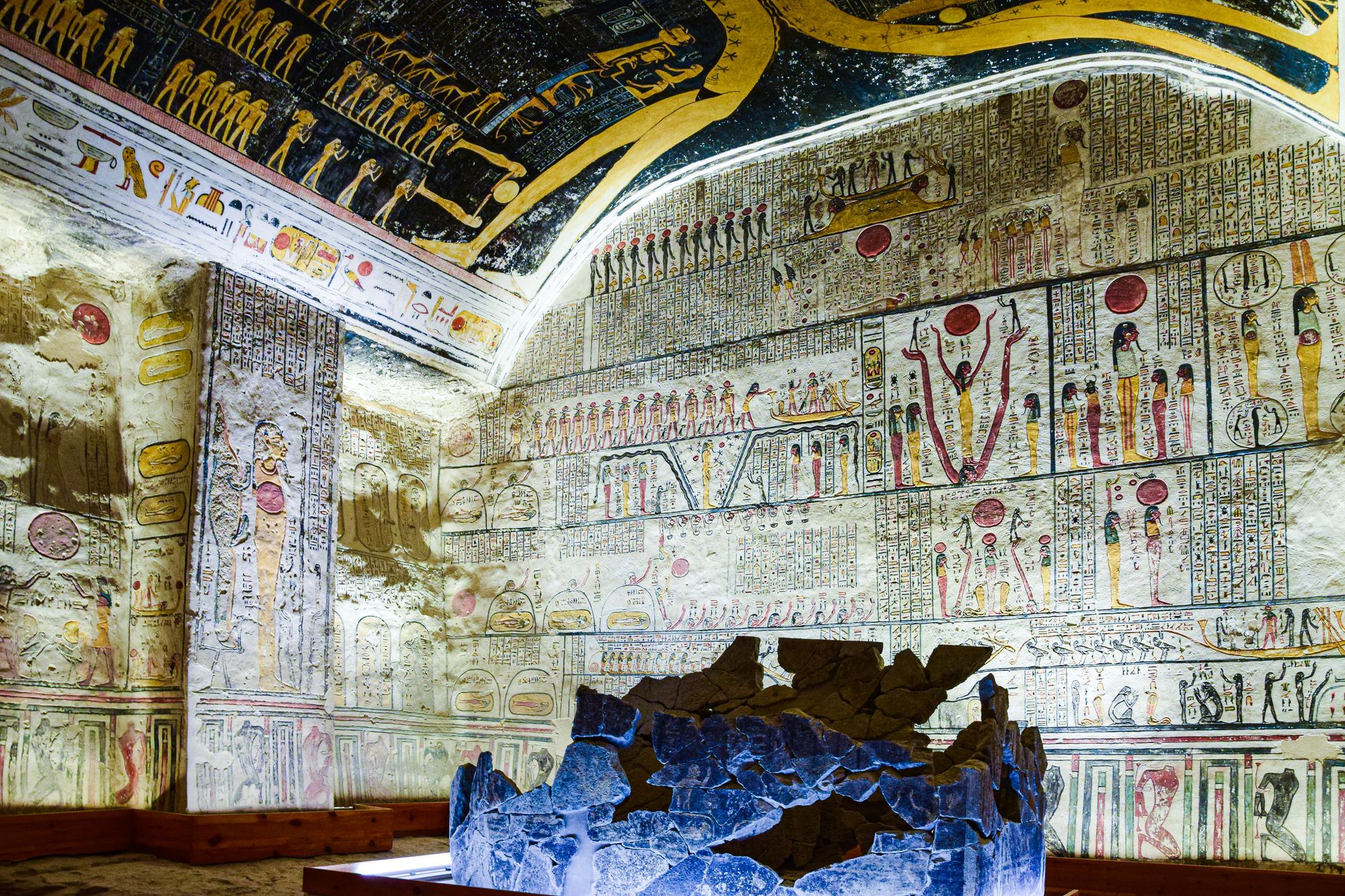
Inside, the decoration is the point. These were the chapels of officials, priests and stewards of the New Kingdom, and the walls carry painted scenes of daily work, funerals, banquets, fishing and farming, with the owner and his family shown large. The colours in the best preserved chapels are startlingly clear. Menna, Nakht and Rekhmire are the names most often cited, and Sennefer is known for the ceiling of vines in its burial chamber. Conditions vary chapel to chapel, and individual tombs are closed for conservation on a rotating basis.
Plan for the heat and for the light. The hillside takes the sun most of the day, and there is little shade between tombs. Morning is cooler and the light is better for the painted walls; the middle of the day is punishing. Bring water and a hat. Some chapels are lit and some are not, so a torch or a phone light helps where the electric lighting is poor or switched off. Photography rules vary by tomb, and guards enforce them on the spot, so ask before using a flash.
Getting there and in
What people get wrong here
- Treating it as one site with one entrance: The tombs are spread across several hillside groups with separate paths and gates, so a single stop at one gate misses most of the site. Pick two or three chapels in one group instead of trying to cover all of them.
- Arriving without checking which tombs are open: Chapels rotate in and out of the open list for conservation, so a plan built around one famous tomb can fail on the day. Ask at the ticket office first and keep a second and third choice.
- Coming in the middle of the day: The climb and the exposed paths make midday genuinely punishing, and the light inside is harshest then. Early morning or late afternoon is easier on the body and the eyes.
- Assuming every chapel is on the main ticket: Several of the best known chapels need an extra ticket, and visitors who have not budgeted for that end up skipping them. Decide which extras matter before reaching the gate.
- Rushing the decoration without context: The scenes are agricultural, funerary and daily life subjects that read better with a guide or a good book. A few minutes of background turns a small painted room into the main event of the day.
Combine it with
Other West Bank sites lie within a short drive of Al-Qurna.
Questions
Are the Tombs of the Nobles worth visiting if I have already seen the Valley of the Kings?+
Yes, and for a different reason. The royal tombs are about scale and the afterlife texts, while the noble chapels are about the life of the period: harvests, banquets, workshops and family scenes painted at close range on smaller walls.
How do I get to the Tombs of the Nobles from the East Bank?+
Cross by the public ferry from the Corniche al-Nil or by road via the bridge, then continue by taxi, tuk tuk or hired car to the Al-Qurna hillside. Walking between tomb groups is possible but the climbs are steep, so arrange transport to wait or return.
How long should I allow for the site?+
Two to three hours covers a small selection of chapels with time to look properly, plus the walking between them. Adding a nearby stop such as Medinet Habu or the Ramesseum fills a comfortable half day.
Is the site accessible for visitors with limited mobility?+
Not easily. The chapels sit on a hillside reached by uneven paths, steps and sometimes narrow tomb entrances, and there is no lift or smooth route. Visitors with mobility concerns should ask which specific tombs have the shortest, flattest approach.
Can I photograph inside the tombs?+
Rules vary between chapels and change over time, with some allowing photography and others restricting or charging for it. Ask at the gate of each tomb rather than assuming the rule from the last one, and never use flash on painted plaster.
What should I combine with the Tombs of the Nobles?+
The site sits close to Deir el-Medina, Medinet Habu, the Ramesseum and the Colossi of Memnon, so two or three of those make a natural West Bank day. A guide or a car for the day saves time on the road between them.