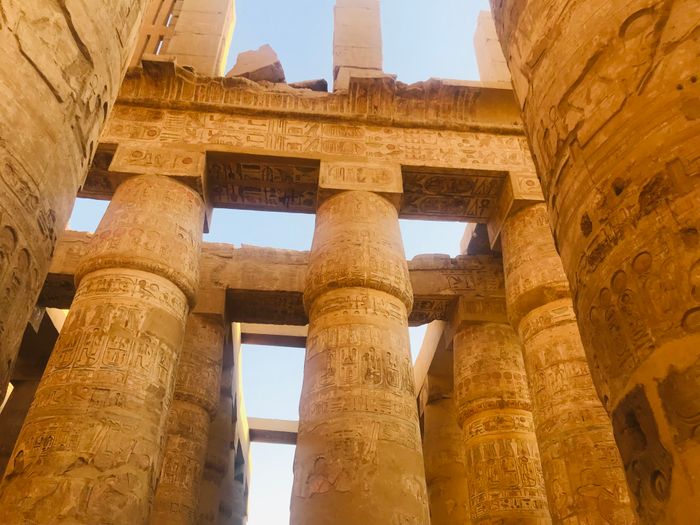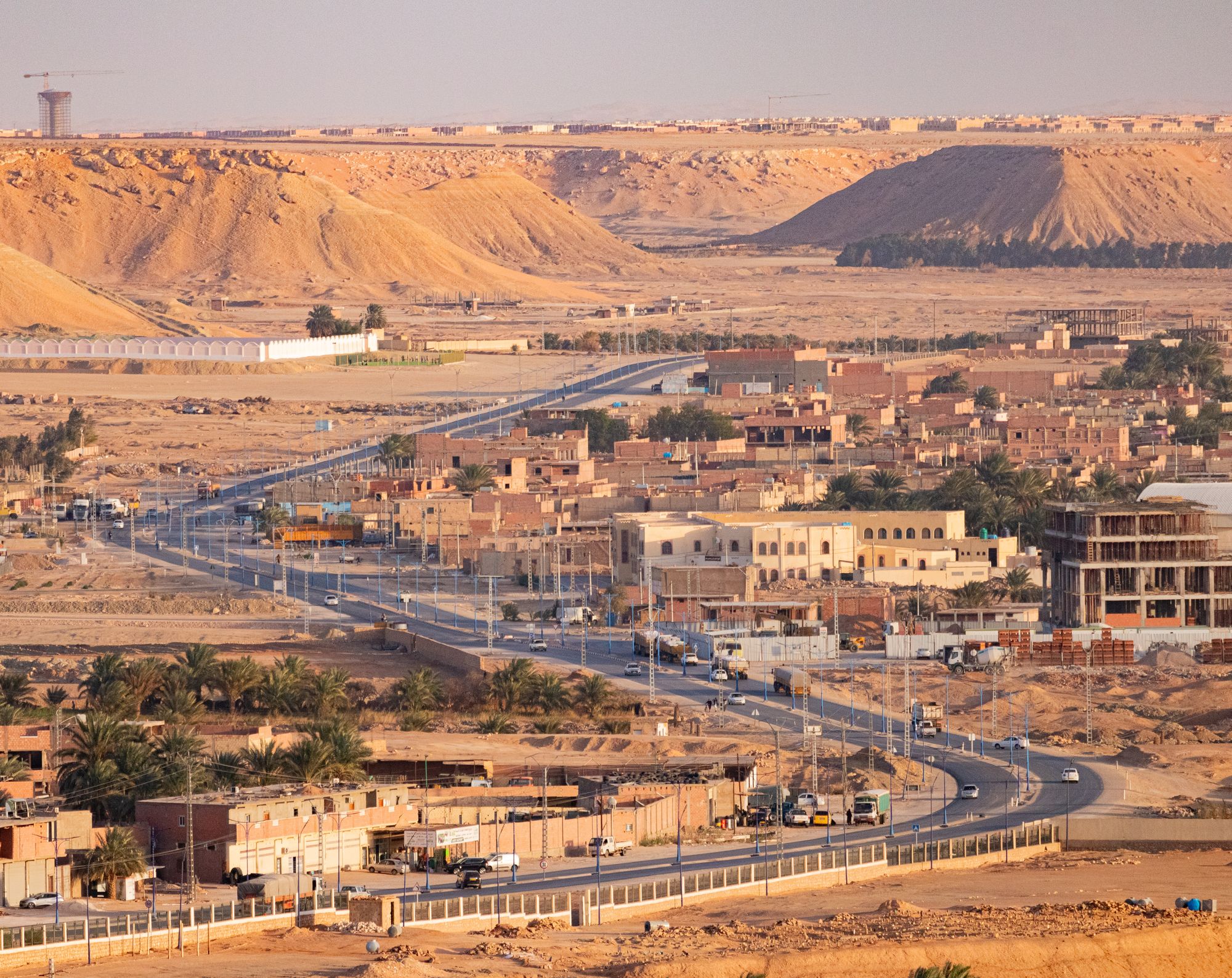
The East Bank is Luxor's city side, holding the railway station, most hotels, restaurants, the souq and two of Egypt's largest temple complexes: Karnak and Luxor Temple. It is the stronger base for a first trip because transport, food and services are concentrated here, and the river crossing to the tombs is short. Karnak and Luxor Temple are linked by the Avenue of Sphinxes. Most visitors spend two to three nights here and cross to the West Bank for day trips.
Why the city sits on this side
The East Bank works as a base because of where the Nile runs and where the railway was built. The river bends east here, and the floodplain on this side is broad enough for dense building, so the station, the hotels and the markets all ended up within a few streets of the water. The two temple complexes, Karnak and Luxor Temple, sit on the same side because they were built on the lived-in bank, the side of the rising sun, while the burial grounds were kept across the river.
That split shapes every practical decision a visitor makes. Services cluster on the East Bank because that is where the city is, not because of any tourist plan. The result is a compact core where you can walk between a hotel, a restaurant and the temple gates without arranging transport for each leg. The West Bank, by contrast, is low-rise and spread out, with fewer pavements and fewer places to eat outside the hotel. The river is short to cross but it is a real boundary, and everything on the other side is a separate trip.
Where to stay on the East Bank
These are the East Bank areas that make sense for different kinds of trip, with what each one is actually good for.
How to spend your time
This order keeps travel time down and puts the largest sites at the right hours.
Three things to walk away from
What you actually do here
Most of a first visit fits into two movements. First, Karnak and Luxor Temple in a single line, since the Avenue of Sphinxes connects them and the walk between is the point. Second, the Corniche and the souq, which work as an evening rather than a sight. Karnak is the larger site and rewards an early start, both for heat and for light. Luxor Temple sits in the middle of town and is the one that stays open into the evening. Check opening hours for your dates, since they shift through the year and around Ramadan.
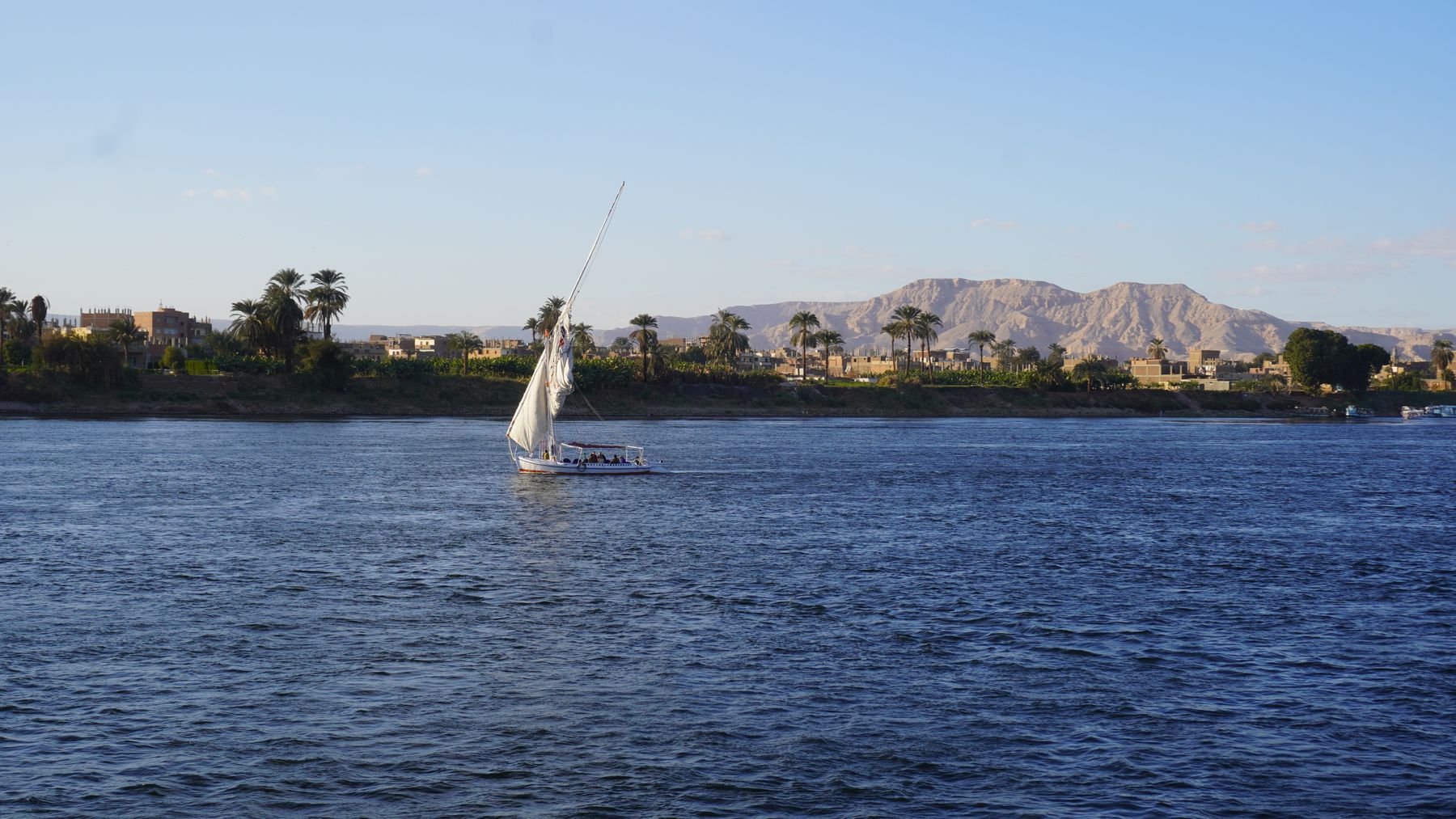
For the West Bank, the public ferry from the Corniche is the straightforward crossing. It runs through the day and into the evening, and it lands you near the main road on the far side. From there, local transport or a pre-arranged car covers the tombs, which are spread over several kilometres. A day trip is enough for the Valley of the Kings and one or two other sites. Anything more means either an early start or a second day, and the ferry timetable is the thing that decides which.
The public ferry crosses from the Corniche to the West Bank through the day and into the evening. It is the cheapest crossing and the one locals use. A private motorboat will take you for more and can be arranged on the spot. Timings change, so check the operator's board at the landing for your date.
When to stay on the other side
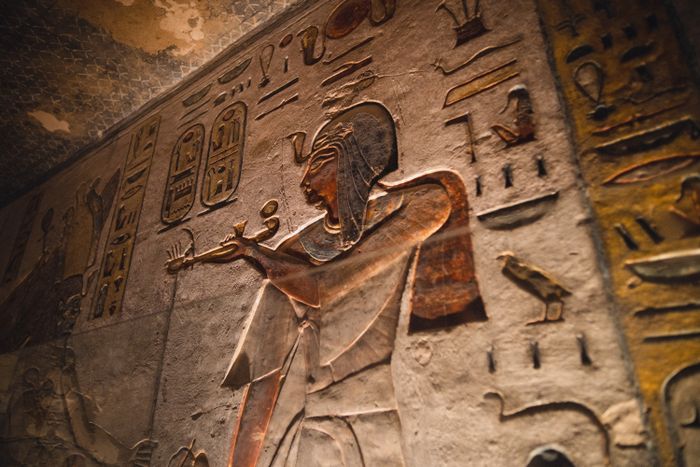
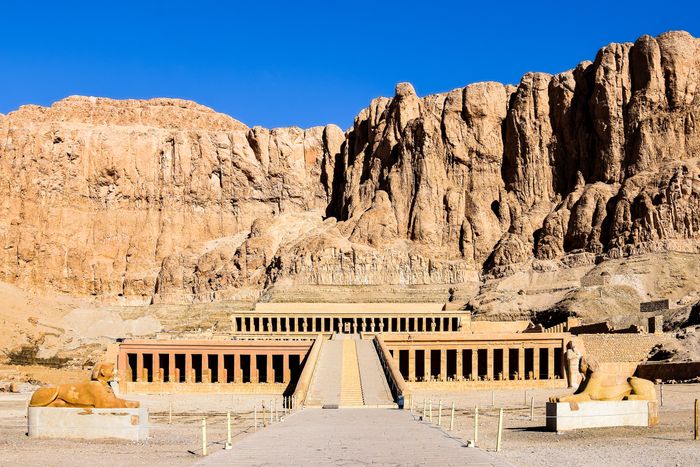
The East Bank is the wrong base if your trip is built around the tombs rather than the temples. Staying on the West Bank puts you close to the Valley of the Kings, the Valley of the Queens and the workers' village, and lets you reach them before the coaches arrive. If your interest is principally funerary, and you are willing to trade restaurants and easy walking for early access, the West Bank is the better choice. The trade is real: fewer places to eat, longer distances on foot, and a ferry crossing whenever you want the city.
The East Bank is also the wrong base if you are in Luxor for a single night between other stops. In that case, the question is not which bank but which site matters most, and a hotel near the station or the Corniche keeps the station, the temples and a meal within reach. Two nights is the point at which the East Bank starts to pay off properly, because the second day lets you cross to the West Bank without losing the first to arrival and orientation.
Questions
Which is better for a first trip, the East Bank or the West Bank?+
The East Bank is the easier base because the station, most hotels, restaurants and the two main temples are here, and the ferry to the West Bank is short. The West Bank suits longer stays focused on tombs and mortuary temples. Start on the East Bank and cross for day trips.
Can you walk between Karnak and Luxor Temple?+
Yes, the Avenue of Sphinxes connects the two complexes and is walkable, though the full distance is long in heat. A taxi one way and a walk back along the Corniche al-Nil is a common compromise. Check opening hours for both sites on the operator's page for your date.
How do you get from the East Bank to the West Bank?+
The public ferry leaves every few minutes from the landing near Luxor Temple and takes a short crossing. Private boats wait nearby and cross on demand, usually faster but needing an agreed arrangement first. A road bridge also connects the banks further south.
What is there to do on the East Bank in the evening?+
The Corniche al-Nil walk, the souq, and the restaurants around Al-Sahaby Lane are the main evening draws, and Luxor Temple is lit after dark. Rooftop bars along the Corniche are another option. Everything sits close together, so an evening needs no transport planning.
Is the East Bank the right side for restaurants and hotels?+
Most of Luxor's hotels and restaurants are on the East Bank, spread between the city center, the Corniche and Al-Awameyah. The West Bank has fewer options and quieter evenings. If eating out and easy transport matter, stay on the East Bank.