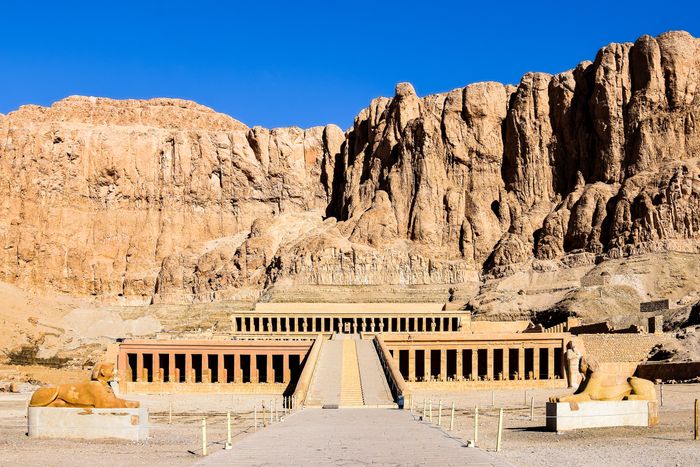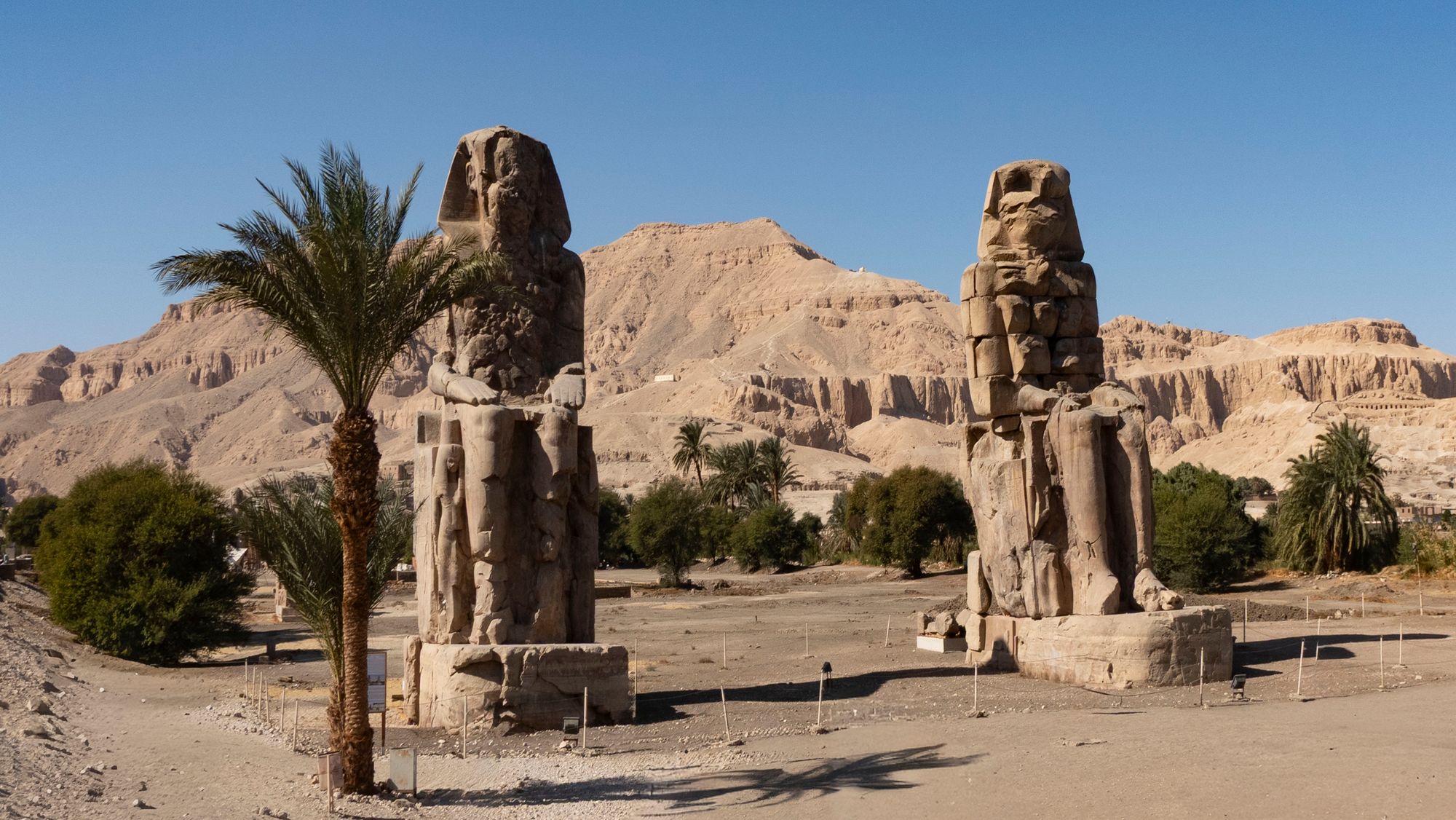
The West Bank suits people whose days are built around tombs and mortuary temples: the Valley of the Kings, Deir el-Bahari, Medinet Habu and the Ramesseum are all on that side. Al-Qurna and New Qurna sit closest to those sites. It does not suit anyone who wants restaurants, a station and the Luxor and Karnak temples on foot, because those are across the river and the bridge is a long way south. Choose one side and accept the crossing.
Why the West Bank splits in two
The West Bank is not a single place with one centre. It is a strip of farmland, villages and desert edge that runs several kilometres from the northern ferry landing down past Medinet Habu. Where you sleep decides how much of that strip you cross before you reach the first tomb. The sites are spread along the whole length, not gathered at one point, so a room beside the ferry is convenient for the river and inconvenient for the monuments, while a room out at Al-Qurna is the reverse.
The reason is geography rather than planning. The cultivated land is narrow, squeezed between the Nile and the cliffs, and the antiquities sit at the foot of those cliffs or inside them. Villages grew where the fields are, and the roads run along the edge rather than through the middle. The result is that no single address on the West Bank is close to everything, and the ferry, the bridge and the local roads each serve a different part of the day.
The areas compared
Each of these places on the West Bank serves a different kind of day, and the differences are about distance and transport rather than quality.
How to choose your area
Work through these in order, because each one narrows the next.
Three things to walk away from
The practical details that matter
The crossing is the first thing to fix. The public ferry from the East Bank lands near the Luxor Temple side and runs through the day, but its hours change seasonally and it slows or stops at night, so a late dinner across the river can strand you on the wrong bank. The road bridge is far to the south of both temple complexes, which makes a car or taxi crossing long even when the distance looks short on a map. Check the ferry's current last departure for your date rather than relying on a description.
The second detail is the address itself. Listings on the West Bank often name a village, a hotel or a viewpoint rather than a street, and two properties with similar names can sit several kilometres apart. Pin the exact location on a map and measure it against the sites you plan to see, then ask whether the road to it is paved and whether a driver will take you there after dark. Local transport on the West Bank is thinner than on the East Bank, so where you sleep and how you move are one decision.
The public ferry's last crossing is not fixed across the year, and it can end earlier than visitors expect. Confirm the current time with the operator or your hotel for your dates, and keep enough margin to cross before it stops, or arrange a motorboat in advance if you plan a late evening on the East Bank.
When the East Bank wins
The obvious answer fails for anyone whose trip is not built around tombs. If the Luxor and Karnak temples, the station, the restaurants and the market are the point, the East Bank puts them within walking distance and removes the crossing from every evening. The West Bank then becomes a day trip, taken early and returned from before the ferry thins out, which is a different kind of holiday from sleeping among the fields.
It also fails for short stays. A single night on the West Bank spends its time on transfers rather than on monuments, because the arrival, the crossing and the departure each take a slice of a day that is already short. Two nights or more is where the West Bank starts to pay back the effort of getting there and back. Below that, staying on the East Bank and crossing for the sites costs less time overall, even though the tombs are on the other side.
Questions
Is the West Bank better than the East Bank for a first trip to Luxor?+
Usually not. The East Bank holds the station, most restaurants and both city temples within walking distance, which makes a first visit simpler. Stay there and cross for the tombs, then decide on a later trip whether you want the quiet side. The full comparison sits in the guide to where to stay in Luxor.
Which West Bank district is closest to the Valley of the Kings?+
Al-Qurna sits nearest, with New Qurna just below it on the same side of the river. Both put you minutes from the ticket office rather than a ferry ride and a drive away. See what else that stretch holds on the West Bank page.
Do I need a car if I stay on the West Bank?+
Not for the ferry crossing itself, which runs every few minutes, but the sites are spread out and taxis or a hired driver fill the gaps. Distances between Al-Qurna, Medinet Habu and the Ramesseum are too long to walk in the heat. The transport options are set out in the getting around Luxor guide.
What is there to do on the West Bank in the evening?+
Less than on the East Bank. New Qurna has a strip of small restaurants and cafes, and most people eat near where they are staying rather than cross back. If a full evening matters to you, weigh that against the morning advantage. The after dark guide covers what stays open.
Can I see the West Bank sites without staying there?+
Yes, and most visitors do exactly that, crossing in the morning and returning in the afternoon. Staying over only saves the crossing time and gets you to the tombs before the coaches. The two-day and longer itineraries show how that fits together.