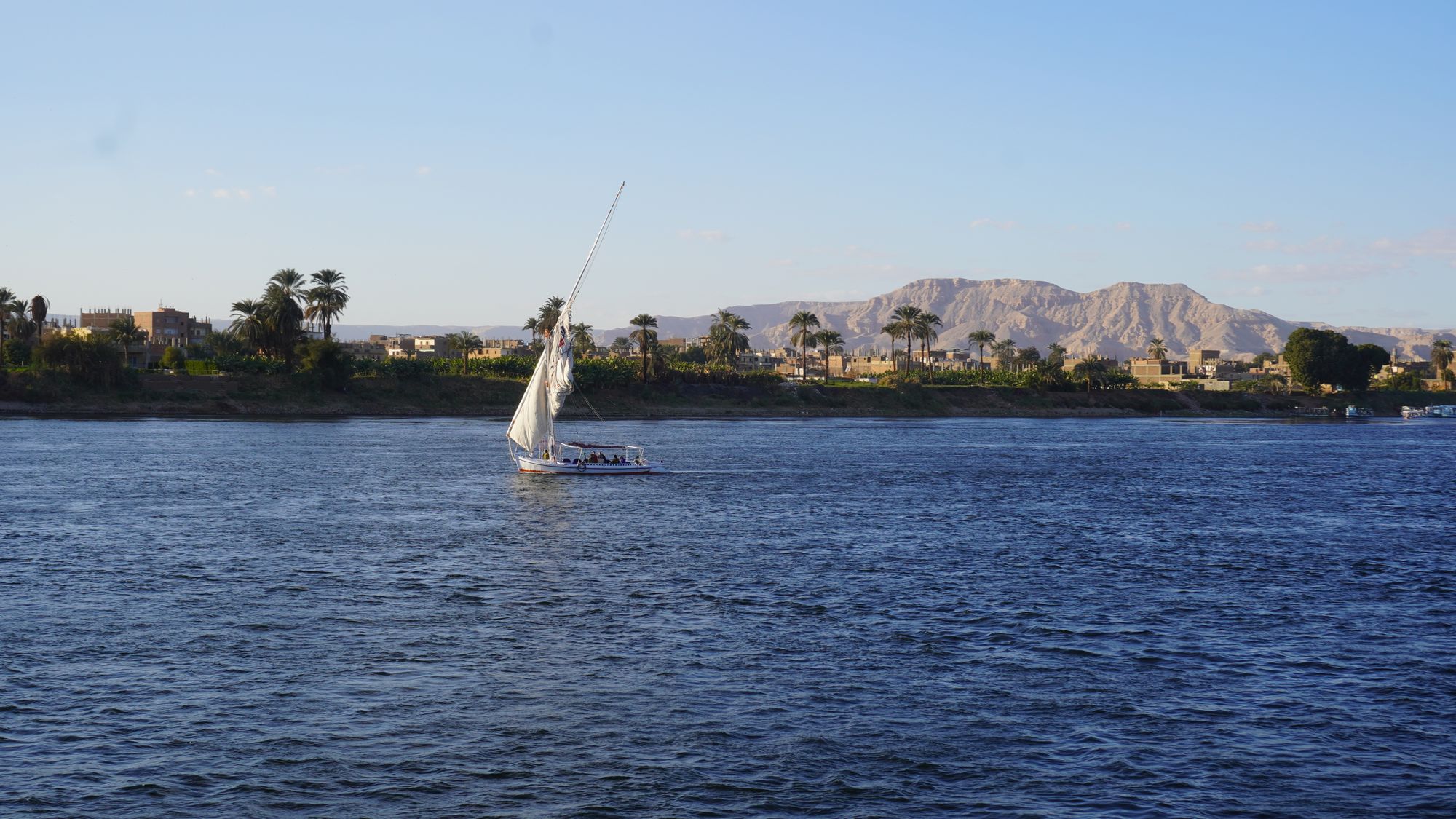
The East Bank is the practical choice for a pool hotel, because the city, the station and most of the accommodation are there, so you swim after a day out rather than building the day around the crossing. West Bank pool hotels exist but are fewer and more spread out. Wherever you book, confirm the pool is on site and open: some listings share a neighbouring pool or close it in winter.
Why the East Bank works
A hotel pool in Luxor is a recovery facility, not a destination. You use it after the Valley of the Kings, when the heat has done its work and the light has gone flat. That timing puts the East Bank ahead, because the temples, the railway station, the corniche and the great majority of hotels sit on that side. You finish the day, cross nothing, and swim. A West Bank hotel with a garden pool can be pleasant, but the crossing sets a limit on when you get back, and the ferry and the bridge are not always convenient at the hour you want them.
The pool also fixes how you plan mornings. If the hotel has one you will actually use, the middle of the day becomes available for it, and the sightseeing shifts to the early and late edges. That is a better shape for Luxor than a straight run at the sites until you are finished. On the East Bank this pattern costs you nothing in travel time; you are already where the day ends, and the swim is between you and dinner rather than between you and a boat.
The pool hotel options
These are the shapes a pool hotel in Luxor takes, grouped by where they sit and what the pool is actually for.
How to choose one
Work through this in order, because the bank and the pool's real status decide more than the hotel's name does.
Three bookings to walk away from
What to confirm before booking
The pool on the listing is not always the pool you get. Some properties share a neighbouring pool, some describe access to a pool a short walk away, and some close the pool in the cooler months. Ask the hotel directly, in writing, whether the pool is on the same property and whether it will be open for your dates. If the answer is that it is open seasonally, ask when it opens and closes. A pool that is closed in January is not a pool hotel for a January trip, and the photograph will not tell you that.
Heated is a separate question. Luxor winter days are warm but mornings and evenings are cool, and an unheated outdoor pool can be unusable for swimming even in sunshine. There is no central register of which hotels heat their pools, so the only reliable source is the hotel itself. Ask, and treat an unclear answer as a no. Rooftop pools are usually smaller and more exposed than garden pools; both can be shaded for part of the day, which matters in summer and matters more in winter.
Hours and seasons change, and hotels vary on when they open, heat or drain a pool. The operator's own page and a direct reply from the hotel are the only sources that count for your dates; a booking site's pool icon is not. Ask before you pay, and keep the reply.
When the obvious choice is wrong
The East Bank default fails if your trip is built around the West Bank sites: the Valley of the Kings, the Valley of the Queens, Medinet Habu, Deir el-Bahri. If you intend several early starts on that side, sleeping there removes a crossing from each morning, and a West Bank pool hotel becomes the better base. It also fails if you want quiet. East Bank hotels with pools sit near roads and across from each other, and a pool deck in a city hotel is a social space, not a silent one. If you want the pool for reading, look at where the hotel sits, not only at the water.
The other case is a short stay. On a two night trip the pool is a small part of the day, and paying for a resort property may buy you time you do not spend in it. A small rooftop pool at a mid-range East Bank hotel does the same job of cooling you down after the sites. The pool is a supporting detail; the bank is the decision that shapes the trip, and the pool should follow it rather than lead it.
Questions
Which side of the Nile should I stay on for a hotel with a pool?+
The East Bank, for most trips, because the city, the station and most restaurants are there and the pool fits around your day instead of dictating it. Choose the West Bank only if your itinerary is tombs and temples and you want to be on that side early. The Nile splits Luxor, and the two banks are a short crossing apart. If you are still deciding, start with where to stay in Luxor.
Are pools in Luxor hotels heated in winter?+
Some are and some are not, and the answer changes by property and by month. A pool that is pleasant in April can be bracing in December, so the air temperature is not a reliable guide. Ask the specific hotel whether its pool is heated on your dates, and treat heating as a question to confirm rather than assume. For how the seasons change a trip, see when to visit Luxor.
Can I use a hotel pool in Luxor if I am not staying there?+
Sometimes, by arrangement, but it is a conversation with the property rather than a published facility. Some hotels offer pool access to non-guests when occupancy is low, and some do not at all. Ask at the desk or in advance, and accept that the answer can change with how full the hotel is. For other ways to spend a hot afternoon, look at free things to do in Luxor.
Is a rooftop pool or a garden pool better in Luxor?+
A rooftop pool usually has the view and the breeze, but can lose the sun behind buildings and can be overlooked from neighbouring roofs. A garden pool is shadier, more private and often cooler in the middle of the day. Which is better depends on whether you want to swim in the heat or swim with a view.
Do pool hotels in Luxor arrange airport transfers?+
Many do, either as a paid service or as a courtesy for longer stays, and the arrangement is usually made directly with the property before arrival. Confirm it when you book rather than on landing, because the answer depends on the hotel and the time of day. If transfers matter to you, compare hotels with airport shuttles in Luxor.