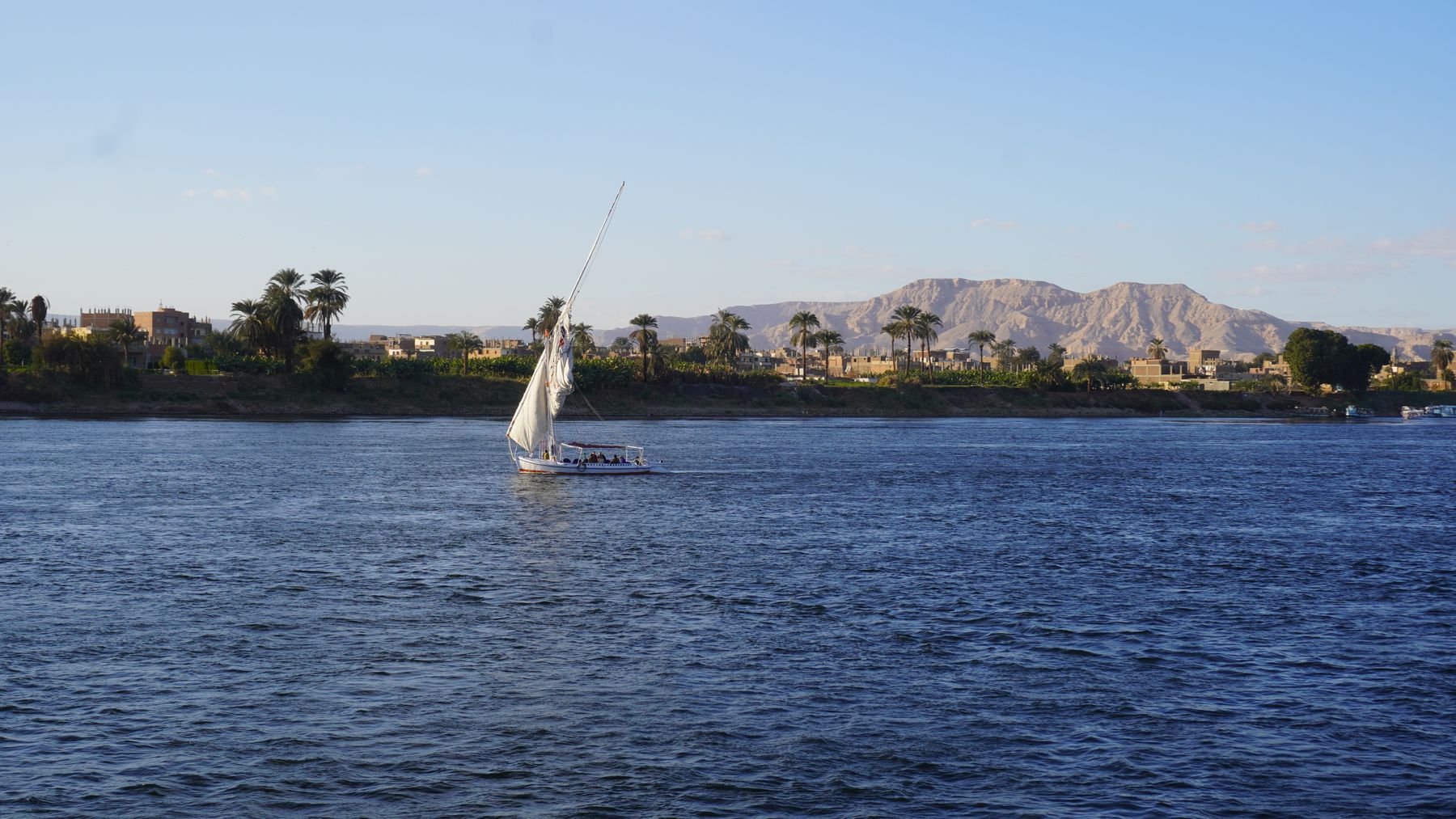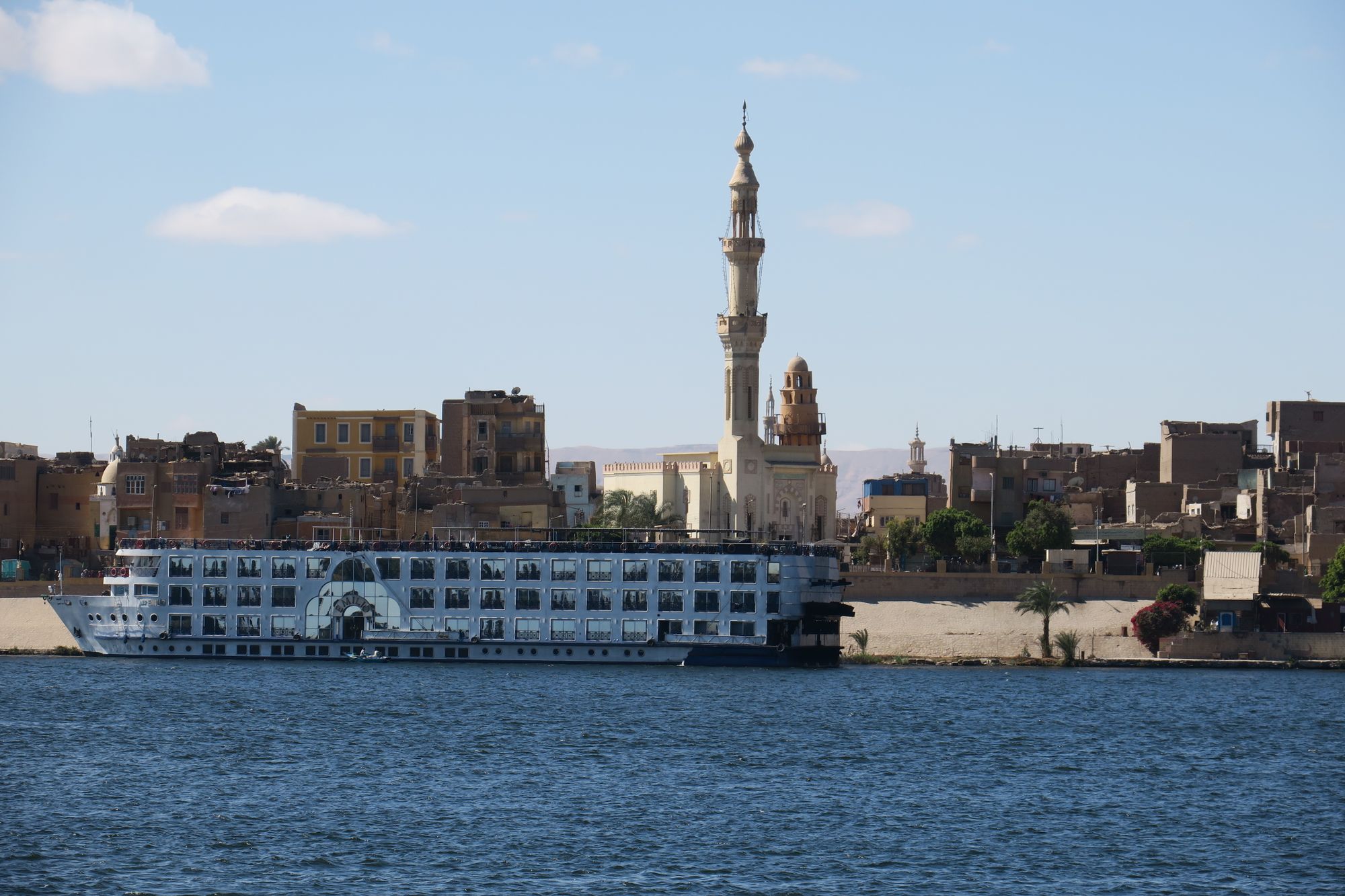
A Nile view in Luxor means one of two things. Either a front-facing room in the Corniche al-Nil strip on the East Bank, where the river and the West Bank cliffs fill the window, or a West Bank property looking back at the city and the Luxor Temple floodlights after dark. East Bank Corniche rooms give the wider panorama and put the station, restaurants and Luxor Temple within walking distance. West Bank rooms trade the city for quiet and the Theban hills. Neither side guarantees every room faces the water, so confirm the specific room category before you book, not just the hotel.
Why the river defines the hotel map
Luxor's hotel geography is a line drawn by the Nile. Almost every property that can claim a river view sits on one of two strips: the Corniche al-Nil on the East Bank, where the city, the station and Luxor Temple are all within walking distance, or a thinner ribbon on the West Bank facing back across the water. The river is also the reason the two banks feel like different trips. The East Bank is dense, lit and walkable. The West Bank is fields, villages and the Theban hills, with the ferry as the link between them.
That split matters because a Nile view is not one product. An East Bank window looks west across the water to the cliffs and the tombs, especially strong at sunset. A West Bank window looks east to the city skyline, the Corniche lights and the illuminated columns of Luxor Temple after dark. Same river, opposite composition. Deciding which picture you want on the glass is the first real decision, and it is not the same as deciding where to sleep.
Nile view options in Luxor
These are the main positions a Nile view can occupy, and what each one actually puts in front of the window.
How to choose the right one
Work through these in order, because the view and the location are separate decisions that get confused with each other.
Three things to walk away from
What to check before booking
Hotel listings in Luxor use Nile view loosely. It can mean a full river panorama, a narrow slice between two buildings, or a rooftop you share with the whole floor. The room category is the thing that matters, not the hotel name. Ask for the specific category and, if it helps, the floor. A higher floor on the Corniche clears the road and the cruise moorings, which otherwise block the lower half of the frame. Riverside West Bank properties can be lower and still see the water because there is less between the wall and the bank.
Check the map for what sits in front of the window. The Corniche road runs between the hotels and the river, so a river view usually means a road view too, with the traffic and cruise ship generators that come with it. On the West Bank, a riverside property may face the ferry landing or a mooring wall. Look at satellite view, not just the marketing photo, and confirm whether the view is from the room or only from a shared roof terrace.
The public ferry between the East and West Banks runs through the day and into the evening, and it is the usual link for anyone staying on the West Bank and spending time in the city. Timings shift with the season and with demand, so check the operator's page or the landing board for your date rather than relying on a fixed schedule.
When the obvious answer is wrong
The obvious move is to book the East Bank Corniche for the panorama. That works for a first trip with temple-heavy days, because Luxor Temple, the Luxor Museum, the station and most restaurants are on that side. It is the wrong move if you want quiet at night: the Corniche is a working road and a promenade, and the rooms closest to the water hear both. It is also wrong if your mornings start early on the West Bank, since you will cross the river twice a day and pay for a view of the place you are leaving.
A West Bank river view is the better answer for slow stays and for anyone whose itinerary is tombs and temples rather than the city. The trade is real: fewer restaurants, less late-night choice, and a crossing to reach the station or the airport. It is the wrong answer if you want the Luxor Temple floodlights from your window, because that is an East Bank view. Neither side is quieter than the other in every sense; the West Bank is quieter in traffic, not always in animals, village life or early calls to prayer.
Questions
Which bank is better for a Nile view in Luxor?+
The East Bank Corniche al-Nil strip gives the classic panorama: the river, the West Bank cliffs and the tombs beyond, with the city behind you. The West Bank gives the reverse, looking back at the city and the Luxor Temple floodlights at night, and it is quieter. The better choice depends on whether you want the view from a city base or a rural one.
Does every room in a Nile-view hotel actually face the Nile?+
No. Many properties have only a portion of rooms facing the water, and the rest look at side streets, courtyards or the city. The phrase describes the hotel, not your booking, so the room category is what matters. Confirm it in writing before you commit.
Can I see the Nile from the West Bank?+
Yes, and from the West Bank you look east across the water to the city, with Luxor Temple and the corniche in the frame. Several riverside properties sit close to the ferry landing, which makes crossing simple. It suits travellers whose days are built around the tombs and mortuary temples.
How do I cross the river between the two banks?+
The public ferry runs every few minutes between the East Bank landing near Luxor Temple and the West Bank, and private boats cross on demand. A road bridge also connects the banks south of the city. Which one suits you depends on where you are staying and how late you are travelling.
Is a Nile view worth paying more for in Luxor?+
It depends on when you will be in the room. The view is at its best at sunrise and after dark, when the cliffs change colour and the temple lights come on. If your days start early and end late, a central location may serve you better and the corniche walk gives you the same river without the premium.