Al Awameyah is a West Bank village south of the ferry landing, close to Medinet Habu, the Colossi of Memnon and the road up to the Valley of the Kings. Stay there if your days are built around the tombs and mortuary temples and you want a small guesthouse rather than a hotel. If you want restaurants, the souq and the station on foot, stay on the East Bank instead.
Why Al Awameyah sits where it does
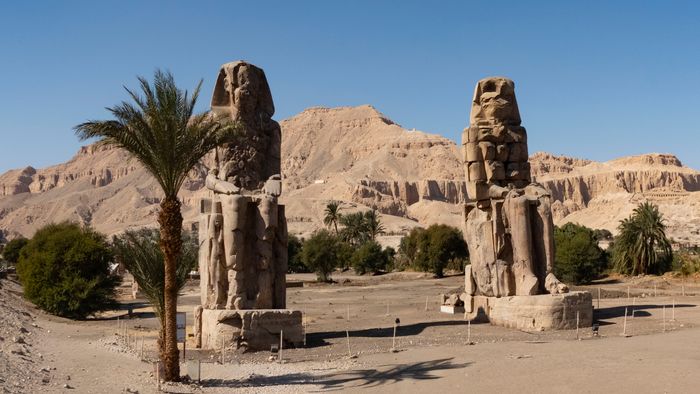
The village occupies the strip of West Bank farmland between the edge of the desert and the river, south of the main ferry landing and north of the road that runs down to Medinet Habu. That position is the whole point. The monuments people cross the river to see, the Colossi of Memnon, Medinet Habu, the Ramesseum, the road climbing to the Valley of the Kings and Deir el-Bahari, are all on this side. A guesthouse here shortens the morning run to the sites and puts the fields and the village lanes between you and the traffic of the East Bank.
It is not a resort strip and never has been. Al Awameyah is agricultural land with houses, a few small guesthouses and the tracks that connect them. There is no promenade, no row of restaurants facing the water, no cluster of shops to wander. What it offers is proximity to the antiquities and a slower set of evenings than the city side. Anyone who books it expecting the East Bank with fewer people will be disappointed. Anyone who books it to be close to the tombs, and accepts that dinner and supplies mean a crossing, gets exactly what the location promises.
The areas compared
Six bases on both banks, and which kind of trip each one suits.
How to settle the crossing
Four things to fix before you commit to a West Bank address.
Three assumptions to leave behind
What to check before booking
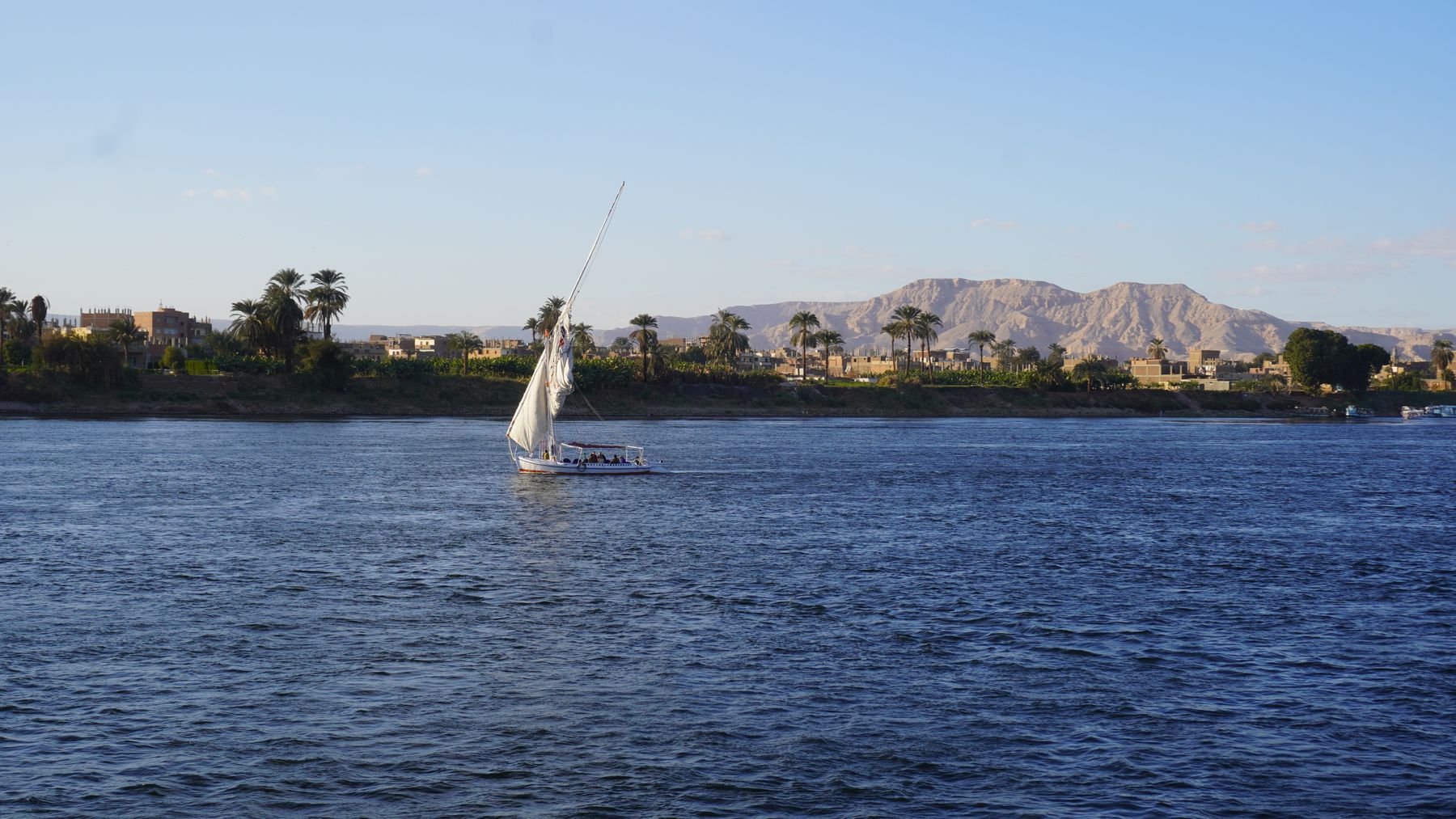
Ask the guesthouse for its position relative to two landmarks: the public ferry landing and the road to Medinet Habu. A property described as Al Awameyah can sit ten minutes from the ferry on foot or considerably further inland, and that difference shapes every day of the stay. Confirm whether the approach road is paved, whether a car can reach the door, and whether the guesthouse arranges a boat. Many do, using a private motorboat rather than the public ferry, which changes the late evening calculation entirely.
Check what is walkable from the door. Some addresses have a small shop or a cafe within a few minutes; others have nothing, so water, breakfast supplies and anything for a late arrival need to come across with you. Ask about air conditioning and about the state of the road after rain, since unpaved West Bank tracks can turn difficult in winter. None of this is a reason to avoid the area. It is the information you need to choose between one guesthouse and another rather than between the West Bank and the East Bank.
Public ferries and private boats both wind down earlier than East Bank restaurants do. Before booking anywhere in Al Awameyah, ask the guesthouse what time the last crossing runs in the season you are travelling, and what happens if you miss it. Schedules change, so treat any answer as provisional and confirm again close to your dates.
When the East Bank is the better answer
The obvious choice stops being obvious when your trip is not built around the tombs. If you have three nights, want to eat out without planning a boat, and intend to see Karnak, Luxor Temple, the museum and the souq on foot, Al Awameyah adds a crossing to almost everything. The East Bank puts the station, the restaurants and the temple complexes within walking distance of each other, and the West Bank monuments become a half day rather than the centre of the trip. That is a different holiday, and it is the one most first time visitors are actually taking.
It also stops working if the people in your group have limited mobility, if you are arriving late and leaving early, or if you want the option of an evening that does not depend on a boatman answering his phone. The village is quiet in the way a farming community is quiet, not in the way a resort is quiet, and quiet has a cost when you want a choice of places to eat at nine in the evening. Be honest about which of those two trips you are booking, because the geography does not bend.
Questions
Is Al Awameyah on the East or West Bank?+
It is on the West Bank, south of the main ferry landing near Medinet Habu and the Colossi of Memnon. That places it with the tombs and mortuary temples rather than with the city, the station and the souq. The wider West Bank layout is set out in our West Bank page.
Do I need a car to stay in Al Awameyah?+
Not strictly, but you will depend on taxis, tuk-tuks, bicycles or arranged lifts for most movements. Distances along the West Bank road are short, yet walking them in heat with temple traffic is not pleasant. For the full set of options, see our page on getting around Luxor.
Can I walk to Medinet Habu from Al Awameyah?+
Medinet Habu is one of the closest monuments, which is a large part of the appeal of this side. The walk is manageable in cooler hours but exposed in the middle of the day. Details of the site itself are on our Medinet Habu page.
Is Al Awameyah quieter than the East Bank?+
Yes, it is a working village rather than a hotel strip, so nights are calm and there is little street noise. The trade-off is fewer restaurants, shops and late services within walking distance. If calm is the priority, compare it with the other West Bank areas on our West Bank page.
How do I choose between Al Awameyah and the East Bank?+
Choose Al Awameyah when the tombs and mortuary temples are the reason for the trip and you want a quiet base among them. Choose the East Bank when you want the station, the corniche, restaurants and the souq within walking distance. Our comparison of where to stay in Luxor covers the same choice in more detail.