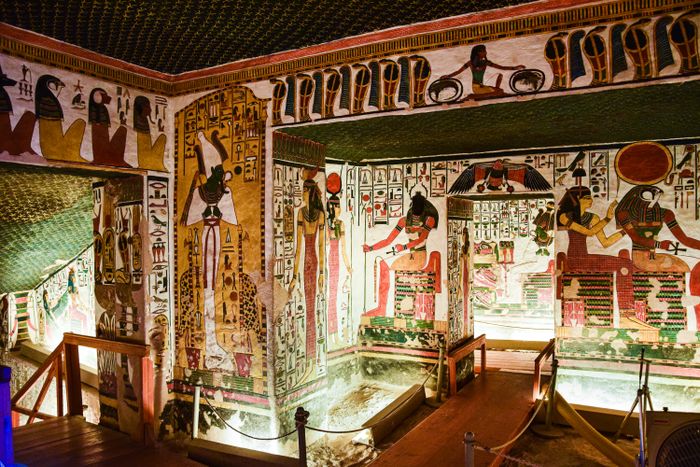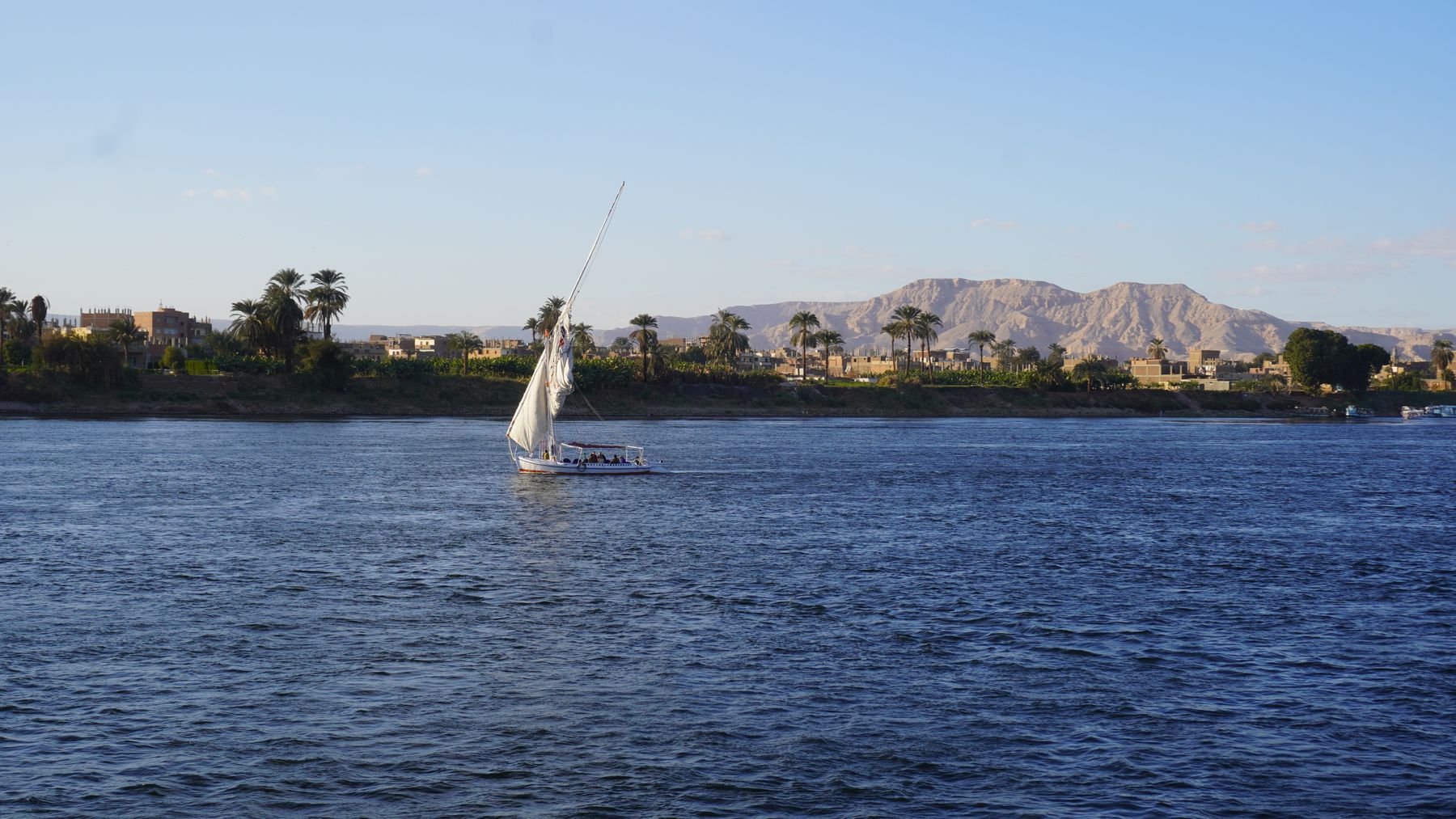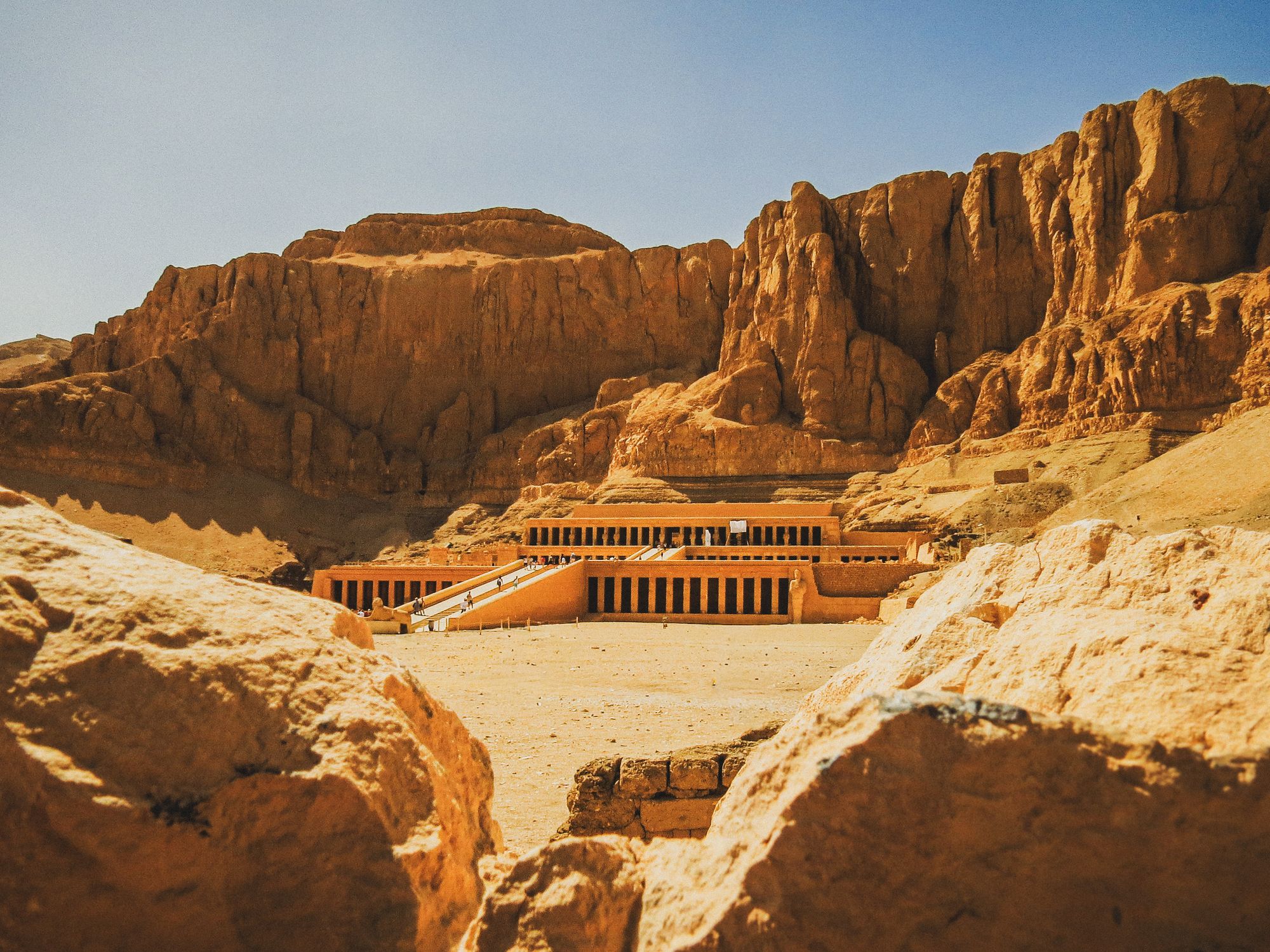
The two trips that justify the travel time are the temple of Dendera and the temple of Edfu, both north of Luxor on the Nile. The temple of Khnum at Esna is the shortest, because the site sits right beside the river. Abydos is the longest and most demanding. Most sites across the river on the West Bank are not day trips at all: they are half days within Luxor.
Why the northern temples work
The day trips that work from Luxor run north along the Nile, because the road and the railway both follow the river and the sites sit close to the bank. Dendera, Edfu and Esna are Ptolemaic and Roman temples, not New Kingdom monuments, so they answer a different question from the Theban temples across the river. The travel is the cost, and the reward is a set of buildings that stayed in use for centuries after the pharaonic state ended. Each one is a single site with a single purpose, which is why they fit a day rather than a morning.
The reason the distances decide the day is straightforward: the further north you go, the more of the day the road takes. Esna is close enough that the site sits beside the river and the town, Edfu needs a longer stretch of driving, and Dendera is closer than Edfu from Luxor but usually paired with it or with Abydos. There is no shortcut across the desert that shortens any of these. The sequence that works is the one that respects how far apart the three sites actually are, rather than the one that tries to fit two or three into a single outing.
The realistic day trip options
The northern temples are the day trips that work; the West Bank is a half day; Aswan is a separate stay.
How to plan the day
Work through these in order and the day organises itself.
Three things to walk away from
What to sort before the day
Opening hours at Dendera, Edfu and Esna are set by the Egyptian Ministry of Tourism and Antiquities and change seasonally, so check the operator's page or the ticket office for your exact date rather than relying on any general figure. The same applies to Abydos, which is the longest run and the one most likely to be affected by a late start. If you are travelling by road, the police escort and checkpoint arrangements for the route north change from time to time, and a driver or a hotel can tell you the current position on the day you plan to go.
For the West Bank, the crossing is the thing to sort first. The public ferry and the private motorboats run at different hours, and the Valley of the Kings, Hatshepsut's temple and the other West Bank sites sit in a cluster that is reachable within a morning. Those are not day trips; they are half days inside Luxor, and treating them as an outing north wastes the structure of your stay. Build the day around the crossing point and the opening time, not the other way round, and the rest of the logistics fall into place.
Police escort arrangements on the route north of Luxor change from time to time and are not always published in advance. Ask a driver or your hotel the day before you travel, and keep your passport with you. The checkpoint system can add to the journey, so leave earlier than the distance alone suggests.
When the obvious trip is wrong
The obvious choice is Aswan, because it appears on every list of things to do from Luxor and the train connects the two cities. A there and back day trip to Aswan does not work: the journey each way takes most of a morning or afternoon, and what remains is not enough for the temple of Philae, the unfinished obelisk and the Nubian sites. Aswan is a place to stay, not a place to visit and leave in the same day. If Aswan is on your list, treat it as a separate leg of the trip rather than a day trip from Luxor.
The other wrong answer is three northern temples in one day. Dendera, Edfu and Esna are strung out along the river and the driving between them adds up, so the attempt produces three rushed stops and a long evening on the road. Two is the realistic maximum, and one is often the better day. Abydos is the longest and most demanding of the northern options, and it is the one to drop first if the schedule is tight. A single temple seen properly is worth more than three seen through a car window.
Questions
Is Dendera or Edfu the better single day trip from Luxor?+
Edfu is one large, complete temple with a single clear focus, so it suits a day built around one site. Dendera has more interior detail, including ceilings and crypts, and is often combined with Abydos. If you are choosing one, pick on which temple interests you rather than on distance. Both are covered in more depth on the individual day trip pages.
Can I reach the West Bank sites without booking a tour?+
Yes. The West Bank is a short crossing from the East Bank, and the sites there are visited independently by ferry and local transport every day. A tour buys convenience and commentary, not access. Start with the West Bank overview to see how the pieces fit together.
How long does the trip to Abydos take?+
Abydos is the longest of the northern runs from Luxor and is usually done as a full day, often paired with Dendera on the return. Check the operator's schedule for your date, because departures and opening hours change through the year. The dedicated page sets out what the day involves.
Is Esna worth stopping for on the way north?+
The temple of Khnum sits beside the river at Esna, which makes it the least disruptive stop on the northern route. It is a smaller site than Dendera or Edfu and works well as an addition rather than the whole day. The Esna page explains what is there and how it fits a longer run.
Should I do a day trip to Aswan from Luxor?+
Aswan is far enough south that a same day return leaves little time at the sites, so it works better as an onward stop with at least one night. If your schedule only allows a day, consider whether the travel is worth what you actually see. The Aswan page covers the realistic options.