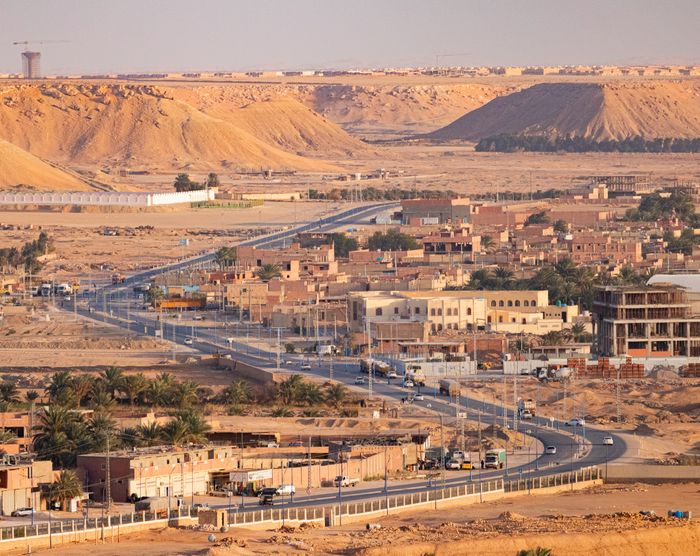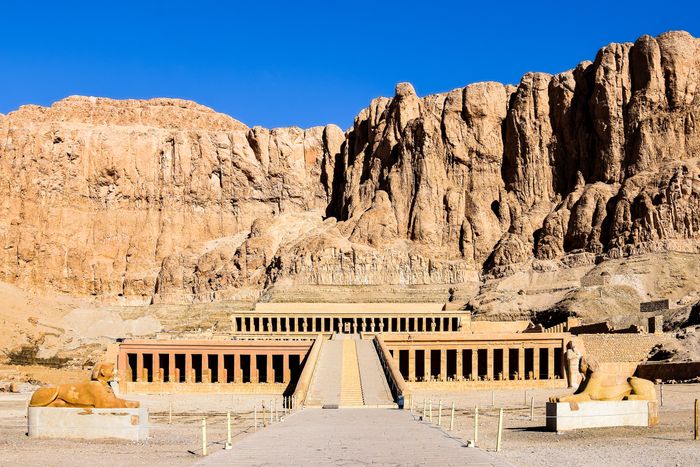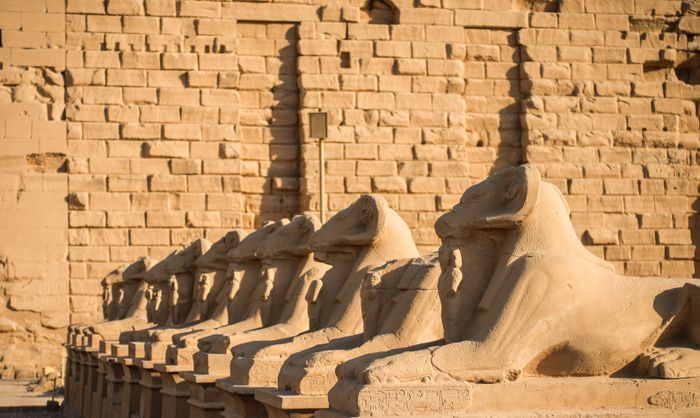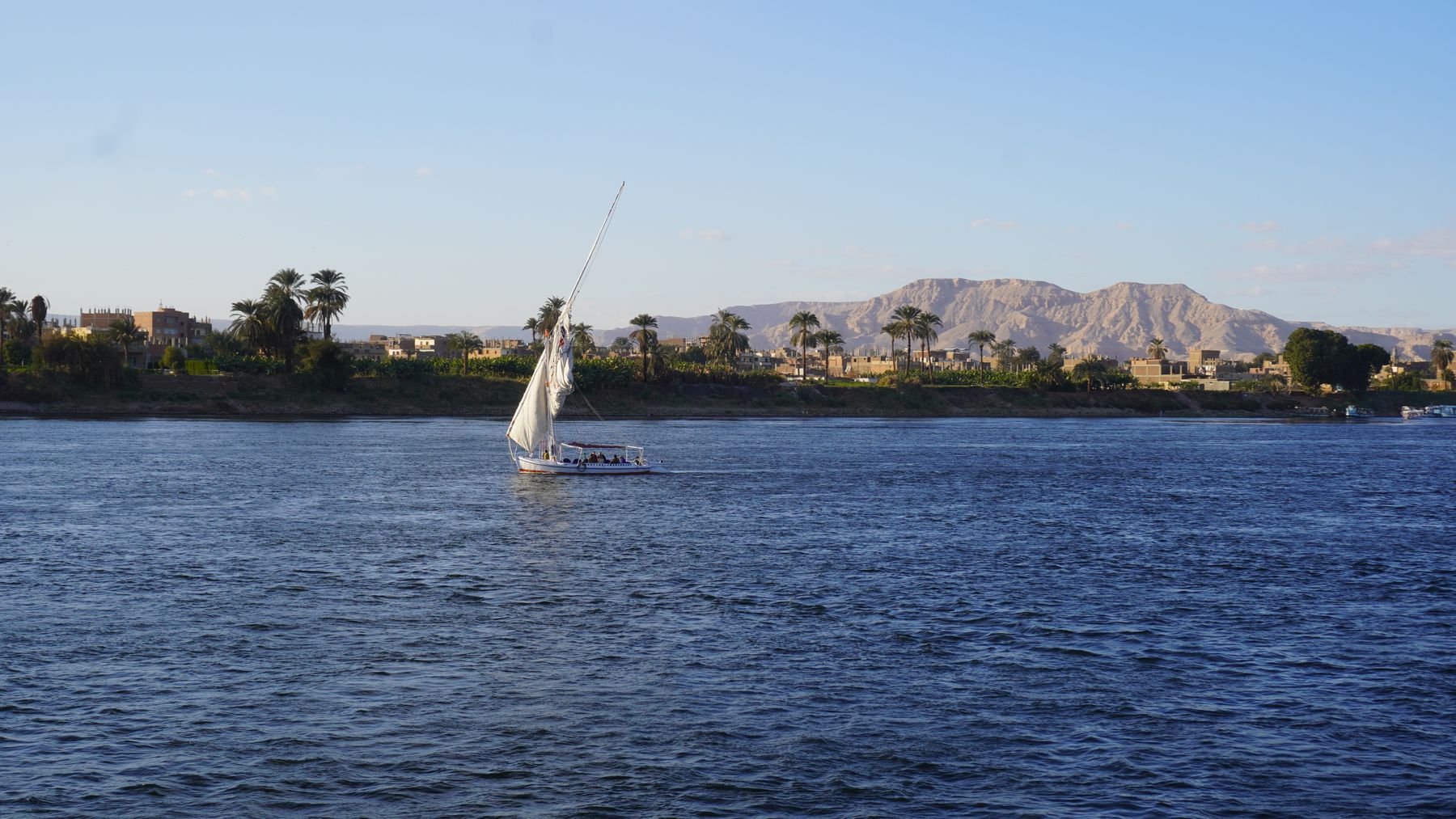
Base on the East Bank if you want restaurants, the railway station, Luxor Temple and Karnak within walking distance, and you accept a daily crossing to the tombs. Base on the West Bank if the tombs, mortuary temples and the quiet of fields and villages are the point of the trip, and you accept that ferries, boats or a bridge define every movement. The Nile divides the city: the East Bank holds the city, the station and most restaurants, the West Bank holds the tombs and mortuary temples.
Why the two banks divide
The Nile is not a scenic extra in Luxor, it is the line that decides how a day is spent. The East Bank holds what a working city needs: the railway station, the great majority of restaurants and shops, Luxor Temple and Karnak. The West Bank holds the tombs and mortuary temples, the fields, the villages and most of the accommodation that markets itself on quiet. That split is not a marketing device, it is geography with consequences. Wherever you sleep, you will cross for something, so the question is only which crossing you would rather make, and how often.
The crossing itself is the hinge. The public ferry links two fixed points, the bridge sends vehicles on a long loop that is slow, and the local boats go where they are asked. None of these is difficult, but all of them take time, and that time comes out of something. If it comes out of an evening meal, the West Bank is fine. If it comes out of a pre-dawn start for the Valley of the Kings, a West Bank base is an advantage rather than a cost.
Where each base puts you
The options below are not equally suited to every trip, so match them to how you plan to spend your mornings and evenings.
How to choose your bank
Work through these in order, because the later answers depend on the first.
Three mistakes to avoid when choosing
What each side actually puts near you
On the East Bank, the useful scale is the walk from Luxor Temple to Karnak, with the corniche and the station between them. Choose a base inside that band and the temples, the trains, the restaurants and the airport road are all reachable without negotiating a ferry. Choose to stay outside it, in the newer districts, and the station and the river become a short ride rather than a stroll, which matters if you plan early departures or late arrivals. The East Bank's strength is not charm, it is that the transport hubs and the evening life sit together.
On the West Bank, the useful scale is the distance from the ferry landing to the monuments and to the villages behind them. Accommodation clusters around the landing and along the roads towards the ticket offices for the Valley of the Kings and the mortuary temples. That puts the main archaeological sites within a short ride, and it puts restaurants and shops at a much smaller scale. Some facilities run on their own hours and change seasonally, so check current times directly rather than relying on a listing.
The public ferry runs between two landings and its hours and ticketing change seasonally; check the operator's page for your date. Local boats are usually arranged directly. The bridge route is long and is the slowest option. Which crossing suits you depends on your base, your hours and whether you are carrying bags.
When the obvious answer is wrong
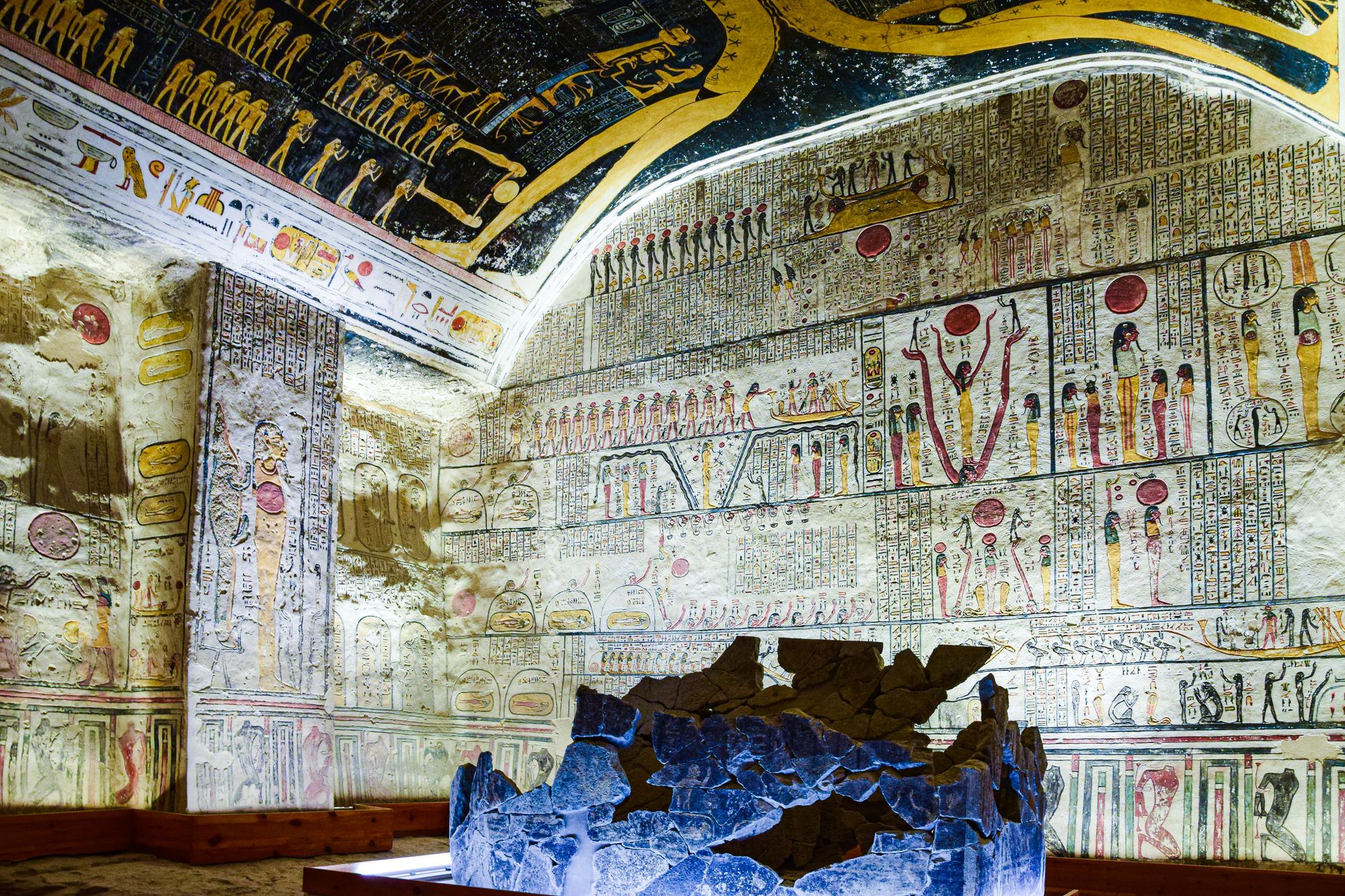
A first trip, especially a short one, usually belongs on the East Bank, but that default reverses if your mornings are the whole point. If you intend to be at the Valley of the Kings or Deir el-Bahari gates before the heat and the coaches, the West Bank removes a river crossing from every one of those mornings. The same applies if your interests lean toward tomb painting, village life or photography in low light. The cost is that you return across the river for the station, for most restaurants and for Luxor Temple after dark.
If you are arriving or leaving by train, the East Bank is the stronger choice, because the station is there. If you are arriving by air, the airport sits on the East Bank side, so a West Bank base adds a crossing to arrival and departure days. A stay of two nights rarely survives that arithmetic. If your stay is longer and you would rather trade evening convenience for early access to the monuments, the West Bank is the better fit, and that trade should be made deliberately rather than by default.
Questions
Which bank is better for a first visit to Luxor?+
The East Bank is the easier first base. Karnak, Luxor Temple, the Luxor Museum, the souq and the railway station are all there, and most restaurants are within walking distance. You can still reach the West Bank sites as day trips using the ferry or a private boat. Start with the East Bank overview to see what sits around you.
What do you give up by staying on the West Bank?+
You give up easy evenings. The West Bank is fields, villages and scattered hotels, with fewer restaurants and less to do after the sites close. You also add a crossing to every East Bank errand, whether by ferry, private boat or the bridge south of the city. The West Bank overview sets out what is actually there.
How do you cross the Nile in Luxor?+
There are three options: the public ferry, which runs every few minutes; private boats, which leave on demand; and the bridge, a road crossing south of the city. The ferry and private boats connect the main riverside points, while the bridge suits anyone with a car or taxi. The getting around Luxor guide explains how the crossings fit into a day.
Can you see the West Bank sites without staying there?+
Yes. The Valley of the Kings, Valley of the Queens, Hatshepsut Temple, Medinet Habu, the Ramesseum, the Colossi of Memnon and the Tombs of the Nobles are all reachable as a day trip from the East Bank. You cross by ferry or private boat and cover the sites by taxi, bike or organised tour. The Valley of the Kings page covers what to expect at the largest site.
Which bank suits families or travellers who want a pool and a quiet night?+
The West Bank's scattered hotels often have gardens and pools, and the evenings are quiet. The trade off is that you rely on transport for restaurants and for anything on the East Bank. If the children need early nights and you want the sites at opening time, the West Bank can work well. Check the family friendly hotels page for what is available on each side.