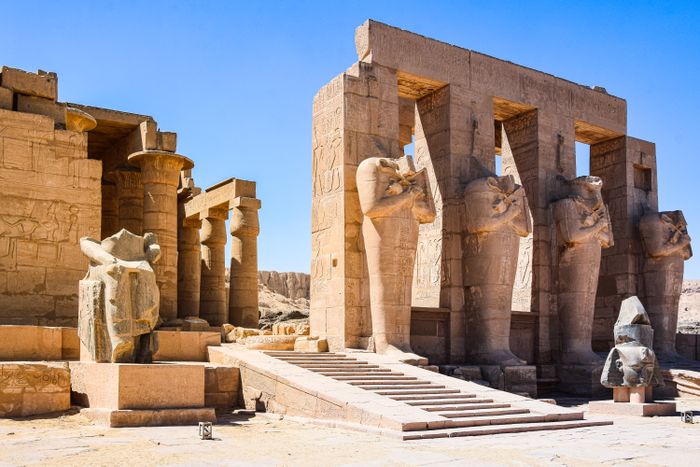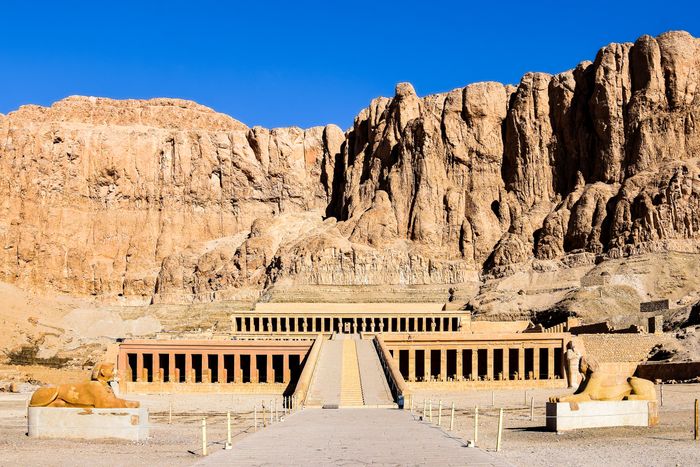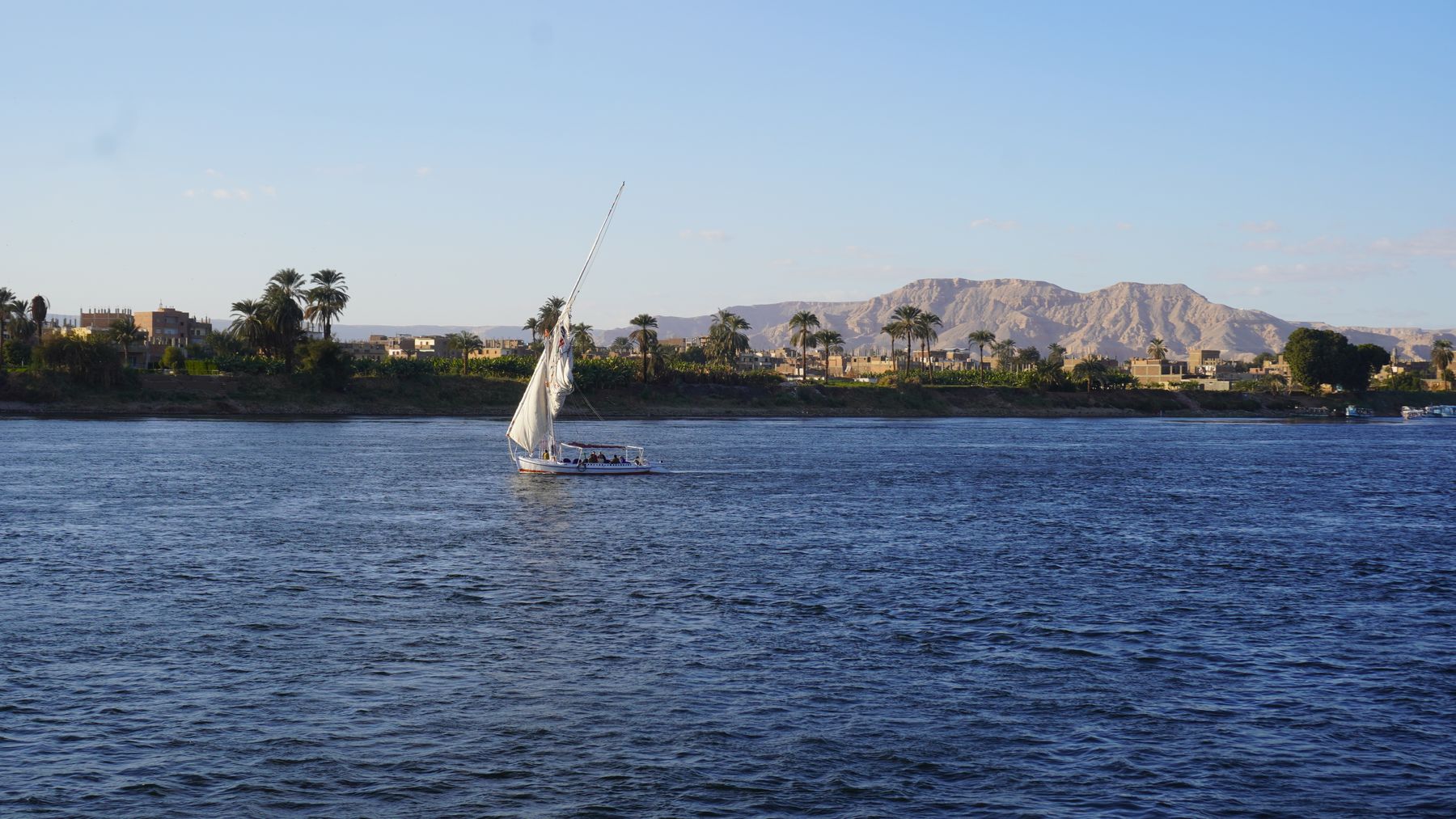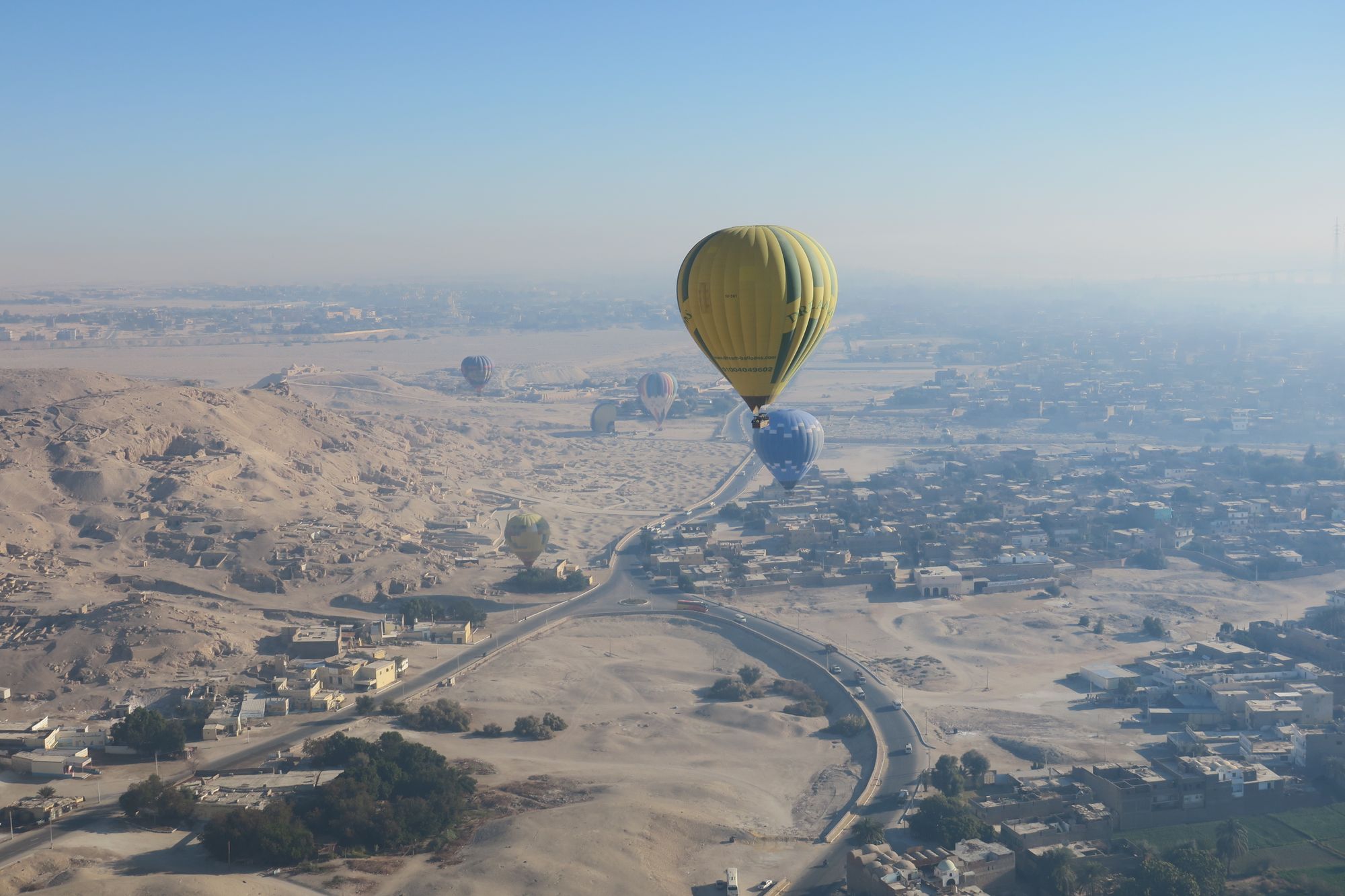
Base on the East Bank if your week is temple-focused, because Karnak and Luxor Temple sit there and the public ferry runs through the day to the West Bank. Give Karnak two separate visits: one early morning for the main axis, one late afternoon for the open-air museum and the Avenue of Sphinxes. Keep the West Bank to three days and treat Dendera as a half-day, not a full one.
Why the East Bank sets the pace
Karnak and Luxor Temple are both on the East Bank, and the public ferry between the two banks runs continuously through the day rather than to a timetable, so a base on the east side keeps the two largest sites within walking or short taxi distance. The West Bank holds the tombs and the mortuary temples, which are spread along a road that runs north to south, and reaching them means a crossing plus a vehicle. A week spent on the east side means the mornings you have the most energy go to the monuments that reward it, and the crossing becomes a short errand rather than the spine of every day.
The East Bank also holds the railway station, most of the hotels and the restaurant strip along the corniche, so evenings after a temple day do not require another crossing. That matters at the end of a week when heat and walking have accumulated. The arrangement is not that the West Bank is worse; it is that the West Bank is a half-day or full-day excursion rather than a place to return to between sites. Treat the river as a boundary you cross deliberately, three or four times across the week, not as something you recross each afternoon.
The main options compared
Each choice below changes how much of the week goes to travelling rather than to the monuments themselves.
How to sequence the days
Work through these in order, because each one determines how the next fits.
Three things to leave out of the week
How to split the week
Give Karnak two separate visits rather than one long one. The main axis, from the first pylon through the hypostyle hall to the festival hall, is the part that exhausts people, and it is best done in the first hour after opening when the light comes in low and the coach groups have not yet arrived. The open-air museum and the Avenue of Sphinxes are a different kind of visit and belong to a second slot, late afternoon, when the heat has dropped and the site is thinning out. Opening hours change seasonally, so check the ticket office or your hotel for your date before fixing either slot.
The West Bank fits into three days without rushing: one for the Valley of the Kings, one for the mortuary temples and the Valley of the Queens, one for the northern sites and the ferry-side cluster. Group each day by road rather than by fame, because the distances between tombs are short but the checkpoints and one-way arrangements add time. Dendera is a half-day, not a full one: the temple itself is compact and the drive is the longer part of the trip. Luxor Temple is the exception to daytime planning. It is lit after dark, and the columns read better then than in flat midday sun.
The public ferry between the East and West Banks stops running in the evening, and the alternative after that is a private boat, which is a negotiation each time. If you are staying on the west side, plan dinners and evening visits on the side where you sleep, or agree a return crossing before you set out.
When the obvious answer is wrong
The West Bank base is the right choice if the tombs are the point of the week, because you avoid the crossing on the days you care most about and you can be at the Valley of the Kings gate before the first ferry arrives. It is also better if you want quiet in the evening, since the east side is where the traffic and the noise are. What the West Bank base costs you is convenience for everything else: restaurants, the station, and the two East Bank temples, which then require a crossing each time.
A mid-week Nile cruise sounds like it solves the crossing problem and does not. It removes two or three days from your temple schedule and puts you on a boat timetable rather than your own. If the week is temple-focused, keep the cruise out of it. Likewise, the Valley of the Kings at midday is the wrong slot almost regardless of season: the tombs themselves are hot and the walk between them has no shade. Go at opening, and use the middle of the day for a museum or a rest.
Questions
How many days do I need for Luxor's temples?+
Seven days lets you give Karnak and Luxor Temple proper time, spend three days on the West Bank, and add one outlying temple such as Dendera. Five days is workable if you drop the outlying site. The full week is calmer because ferry crossings and site roads take longer than the maps suggest.
Should I stay on the East or West Bank for a temple week?+
The East Bank suits a temple-heavy week because Karnak, Luxor Temple, the museum and the station are all there. The West Bank suits dawn starts at the tombs and mortuary temples. The public ferry between them runs through the day, so neither base locks you out of the other side.
Is it worth visiting Karnak more than once?+
Yes, because the complex is large enough that one visit covers only the main axis. A second late-afternoon visit adds the open-air museum and the Avenue of Sphinxes in softer light. Spreading it over two visits costs little time if you are already staying on the East Bank.
Can I visit Dendera and Edfu in one day?+
It is possible but it becomes a driving day with short stops inside each temple. Dendera alone works better as a half-day from Luxor. If you want both, plan a long day and accept that one temple will be rushed.
How do I get around Luxor between temple sites?+
The public ferry covers the river crossing through the day, and taxis or microbuses cover the West Bank loops. On the East Bank, the Corniche and the city center are walkable between Luxor Temple and the museum. Ferry timings change seasonally, so confirm the last crossing for your date locally.