Esna, Edfu and Armant all lie south of Luxor on the west side of the Nile; Armant is much the closest to the city, Esna comes next and Edfu is furthest. Esna and Edfu carry the temple weight; Armant is a smaller, older site with almost no visitor infrastructure. The drive is the easy part, the timing is not: each temple has its own opening pattern, so check the ticket office or your hotel for your date before you commit to a sequence.
Why the drive works this way
The Nile bends east between Luxor and Esna, and the road that follows it puts Esna first because the river does. Edfu sits further south on the same bank, so a car heading down the valley meets the two temple towns in a fixed order and cannot reorder them without doubling back. Armant breaks the pattern: it lies south of Luxor on the west bank, close enough to the city that it belongs to a different trip entirely. That geography, not preference, is what shapes the day, and it is why the sequence in the answer is the sequence you get.
The complication is that each of the three keeps its own hours, and those hours are set by the antiquities authority rather than by any tour operator. Esna's temple sits below street level in the middle of a working town, so access depends on the surrounding market and on whoever holds the key that morning. Edfu runs to a more predictable pattern but shifts with the season and with cruise-ship traffic. Armant is the loosest of the three, sometimes open, sometimes not, with no reliable published timetable. Build the drive around confirmed hours, not around distance.
Ways to cover the loop
These are the realistic ways to reach Esna and Edfu, with Armant treated separately or added at the end.
How to sequence the day
Fix the opening hours before the route, then work south and treat Armant as its own trip.
Three assumptions to drop before booking
What to settle before leaving
Confirm your transport mode first, because it decides how much of the day you control. A private car with a driver gives you the ability to wait out a locked gate or a slow ticket queue, and it is the option most visitors take for Esna and Edfu together. An organised small-group tour costs less per person but moves to a fixed schedule, so a delayed opening at one temple eats the next. Self-drive is possible but adds the question of parking in Esna's narrow streets, where the temple entrance is not obvious from the road.
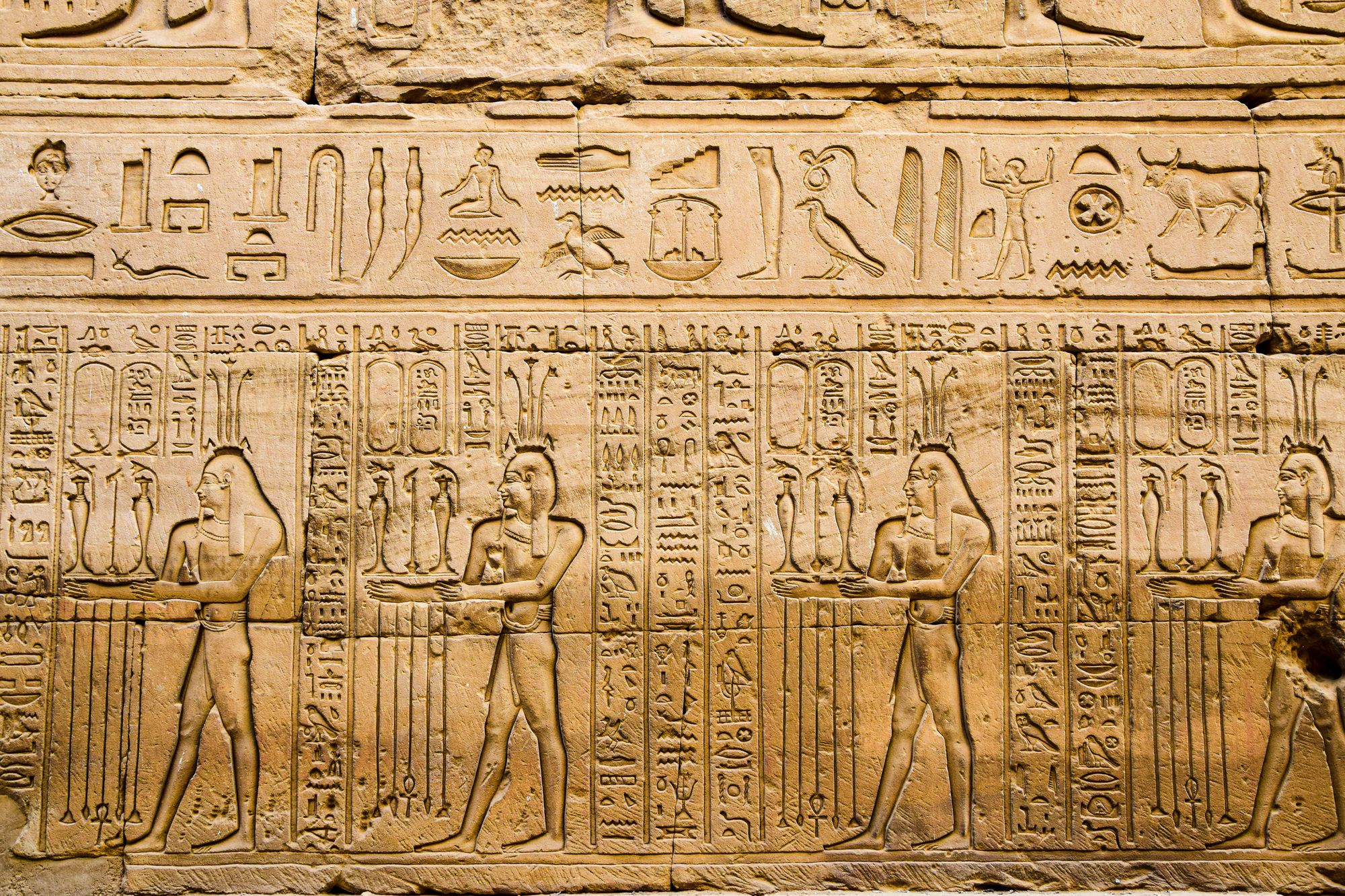
Then confirm what you are actually seeing at each stop. At Esna the draw is the Ptolemaic and Roman hypostyle hall, reached by a descent from street level, and the surrounding town is part of the visit. Edfu is the large, complete Ptolemaic temple, the one most people picture when they think of a Nile temple, with a long approach and substantial walls. Armant is much older in origin and much smaller in what survives, with a scattered set of remains rather than a single monument. Knowing which of those three you want governs the order and the pace.
The road south runs on the east bank the whole way, so nothing about the drive requires a ferry. Armant is the exception: it is on the west bank, which is why combining it with Esna and Edfu means a crossing on the way back rather than a straight run. Check the bridge and ferry arrangements for your date, as they change.
When the obvious answer is wrong
The obvious answer is to do all three in one southbound sweep and be back in Luxor by evening. That works only if Esna, Edfu and Armant all open when you expect and none of them holds you. In practice the most common failure is treating Armant as a third stop on a day that already includes two temple towns. Armant is on the west bank and its remains are not on the scale of the other two, so bolting it onto a full southbound day adds a crossing and a detour without adding much.
The other wrong assumption is that a driver removes the need to plan. A driver knows the road and the local conditions, but ticket offices, opening hours and site access are not things a driver controls, and no amount of local knowledge changes a locked gate. If a stop matters to you, verify its hours yourself and decide in advance what you will drop if the day runs late. Armant is the natural thing to drop, and Esna, sitting closest to Luxor, is the easiest to move to another morning.
Questions
Can Esna, Edfu and Armant be done in one day from Luxor?+
Yes, but only as a long day, and only if the temple hours line up with your start time. Most people are better served by making Esna and Edfu the real targets and treating Armant as optional. If Armant matters to you, give it its own half-day instead of bolting it onto the return.
Is Esna worth stopping for, or should I go straight to Edfu?+
Esna is the nearer site and the one that fits most naturally into a Luxor day, with a temple that sits below the modern street level. It rewards a slower visit rather than a quick look from the road. Edfu is the larger and more complete temple, so if you can only manage one, weigh which matters more to you.
Should I drive myself or hire a car and driver?+
Self-driving only makes sense if you already hold a valid licence and are used to the road conditions, because the driving itself is not the hard part. A car with a driver removes the parking and navigation problems and lets you set the pace. If you would rather not think about any of it, an organised tour does the same job with less control.
What is actually at Armant?+
Armant is an older site with far less visitor infrastructure than Esna or Edfu, and it asks for more patience than the bigger temples. The reason to go is the quieter setting and the sense of a place that predates the Ptolemaic showpieces. Read what is there before you commit a day to it.
Where should I stay if I am doing the southern temples?+
The East Bank puts you closest to the road south and to the station, which makes an early start simpler. The West Bank is quieter but adds a river crossing to the beginning and end of the day. Both work, but the East Bank saves time on this particular trip.