Medinat Habu area guide: sleeping next to the West Bank's best temple
 Medinat Habu temple pylons rising above sugarcane fields at sunset
You can walk out of a Medinat Habu guesthouse and be inside Ramesses III's mortuary temple in five minutes — for $30-50 a night, which is what you’d pay for a dusty inland room in Luxor town.
What the Medinat Habu area actually is
Medinat Habu village sits at the southern end of the West Bank archaeological zone, wrapped around the mortuary temple of Ramesses III of the same name. It is agricultural, mudbrick, small — probably 200 houses in the immediate settlement, plus scattered farms and a handful of guesthouses. The temple is genuinely on the edge of the village: you can stand on some rooftops and see its pylons over the palm trees. Deir el-Medina, the workers' village, is 1.5 kilometres north; the Valley of the Queens, about 3 kilometres; the Ramesseum, 3.5 kilometres; Hatshepsut, 5.5 kilometres; the Valley of the Kings, 7.5 kilometres.
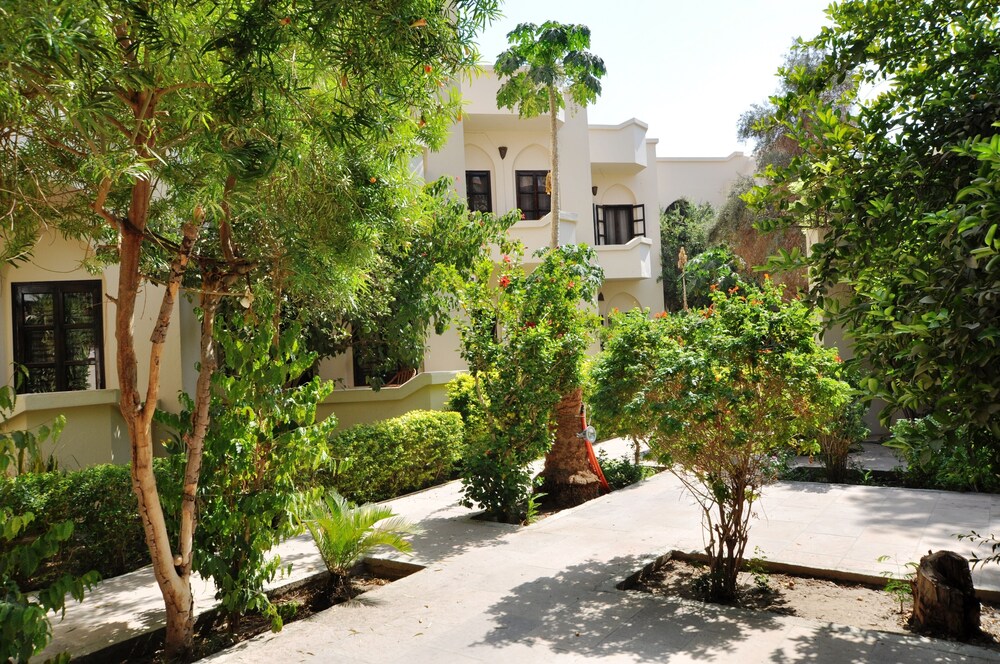
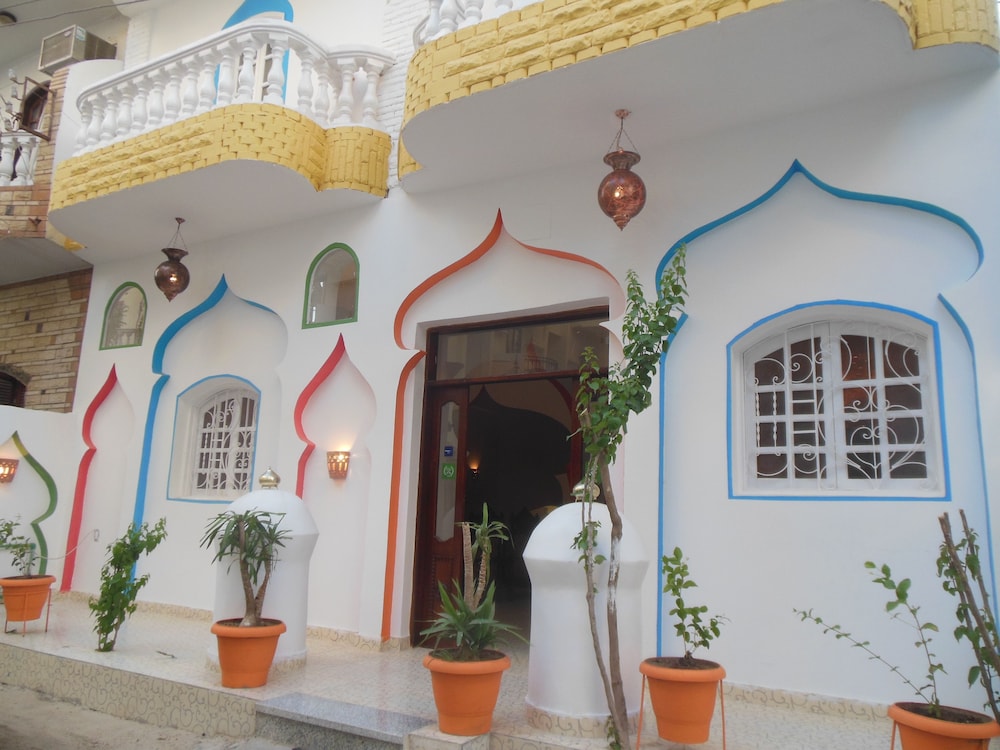
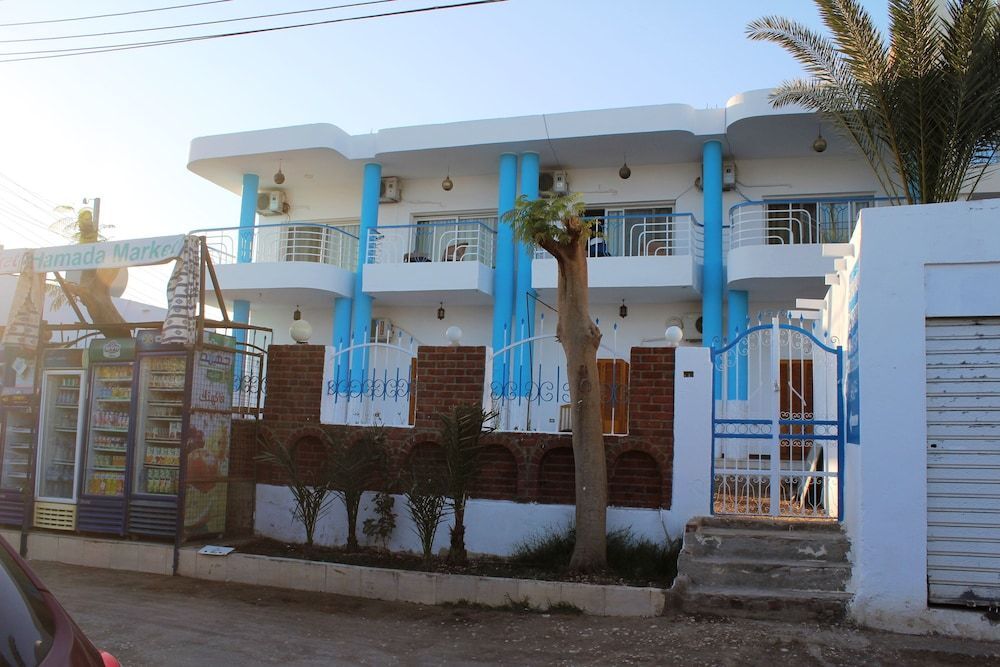
The hotel supply is small and specific: family-run guesthouses, a couple of larger properties like Al Baeirat hotel and Nile Valley Hotel & Restaurant nearby, and a scattering of apartment rentals. Amenities are modest — small pools at some, simple breakfasts, rooftop terraces at most. What the area sells is proximity: to Ramesses III's temple, to fields, to sunrise light over the Theban cliffs. For a specific kind of traveller this is the best Luxor address there is. For everyone else it is too quiet and too far from anywhere with a bank.
Who should book Medinat Habu
Book here if you have been to Luxor before and know that the West Bank temples are your priority, or if you are on a longer first trip that includes serious time in the necropolis. Photographers get the best deal: golden-hour light on Medinat Habu's pylons is one of the finest light shows in Egypt, and living inside the ten-minute walk means you can shoot at 5:15pm and be back at your guesthouse before dark without a taxi negotiation. Repeat visitors, egyptology enthusiasts and slow travellers all cluster in this pocket for the same reason.
It also suits couples on a honeymoon or milestone trip who want a specific kind of atmosphere — rural, quiet, deeply Egyptian, with balloons overhead at dawn and buffalos in the fields at sunset. This is not the resort honeymoon; this is the honeymoon where you tell people about a mudbrick guesthouse with a rooftop breakfast and a view of a 3,000-year-old temple. If that appeals, this village delivers it more directly than anywhere else on the West Bank. If it does not appeal, you already know you should stay somewhere else.
Who should skip it
Skip Medinat Habu if it is a two-night stopover and you want to see Luxor Temple, Karnak and the tombs on a tight schedule. The commute back to the East Bank is real — 25-35 minutes to the ferry or bridge, plus the crossing, plus the East Bank walk. You will spend meaningful chunks of the trip on the road. Skip it too if you want restaurant choice: the village has three or four places to eat, and you know all of them by the second dinner. The nearest broader food scene is 6-8 kilometres away in Al-Gezira or across the river.
It is also the wrong pick for anyone with heat-tolerance issues visiting in May through September. The West Bank in summer is brutally hot and Medinat Habu is far enough from the ferry that afternoon errands become expeditions. Stick to shoulder season here (October through April is honestly the sweet spot). And skip it if you want a proper pool — the couple of hotels with pools nearby have small ones, and none rival the Corniche resort experience. This is not where you sunbathe; it is where you tomb-hunt and stargaze.
What a night costs
Cheap, especially given what you are steps from. Simple village guesthouses run $18-30 for a double with breakfast. Nicer family-run places with rooftops and small pools sit at $30-50. Al Baeirat hotel, which is one of the more established properties in the broader West Bank south, runs $50-85. Villa Al Diwan Luxor operates at $60-100. The high end is Al Moudira Hotel, further out in Al-Bayadiya rather than Medinat Habu proper, at $180-280 — a completely different category of experience but worth naming because it draws from the same pool of "quiet West Bank luxury" seekers.
Compared to the Corniche you are paying 30-50% of the equivalent room price. Compared to City Center, 60-80%. What you save on the room you should mentally reallocate to taxis — expect $6-12 a day if you are exploring the necropolis by car rather than bike, and factor in a bike rental at $3-5 a day if you plan to move under your own steam. Even with those additions, most travellers save $30-60 a night versus East Bank equivalents.
What is within walking distance
Medinat Habu itself, obviously — five to fifteen minutes depending on your specific hotel. That single temple is worth the neighbourhood; the coloured reliefs in its second court are the best-preserved painted decoration in the Theban necropolis and get one-tenth the crowd of Hatshepsut. Deir el-Medina is a 20-30 minute walk through fields, one of the most rewarding morning strolls in Luxor if you time it before 8am. The Colossi of Memnon are about 20 minutes on foot along the main road; not exciting to visit but pleasant to walk past.
The Valley of the Queens is technically walkable (3 kilometres) but the last stretch climbs, and the temperature after 9am makes this a hot-season non-starter. The Valley of the Kings, Hatshepsut and the Ramesseum are all bike or taxi distance. Restaurants: three or four in the village, none you would describe as destinations but all doing honest tagines and grilled chicken for $4-7. For anything more ambitious you taxi to Al-Gezira or cross to the East Bank.
Medinat Habu or Al-Qurna: which to pick
Both are West Bank villages, both put you close to the tombs, and both attract a similar slow-Luxor traveller. Al-Qurna spreads across the base of the cliffs and puts you closer to the Valley of the Kings and Hatshepsut, at the cost of being further from the ferry. Medinat Habu sits further south and puts you closer to Ramesses III's temple, Deir el-Medina and the Valley of the Queens, at the cost of being further from the northern tombs. If your priority is a single unhurried day in the Valley of the Kings, Al-Qurna edges it. If your priority is atmosphere and photography and you don’t mind a taxi north on tomb days, Medinat Habu edges it.
My honest bias: Medinat Habu village is the more photogenic base. The temple is right there, the fields are working farmland rather than tourist infrastructure, and evenings feel more like rural Egypt than tomb-tour Egypt. Al-Qurna has more accommodation options and is easier if you have not booked in advance. Either way you get 80% of what makes the West Bank special, and the specific village probably matters less than the fact that you chose west at all.
The honest verdict
Medinat Habu is the right answer for a small and self-selecting group of travellers: slow visitors, repeat visitors, photographers, and honeymooners who want atmosphere over amenity. For that group it is one of the best places to sleep in Egypt at any price. You are five minutes from a superb temple, twenty from a working village life, and in dark-sky range of stars you cannot see from the Corniche. Nights here are genuinely quiet in a way most Luxor accommodation is not.
For everyone else — first-timers, short-trippers, restaurant lovers, resort seekers — this is not the right choice, and booking it because it looks charming online is a common mistake. If you are unsure, spend your first two nights in central Luxor and add one Medinat Habu night on the second-to-last day of the trip. You will know within twelve hours whether this village is your kind of place, and if it is you will already be planning to come back and stay longer next time.
Before you book
The questions people ask about East Bank, answered with this month’s numbers.
The temple closes to ticket-holders around 4:30-5pm depending on season, so you cannot be inside for full sunset. But the walk around its outer walls in the last hour of light is one of the great Luxor experiences, and if you are staying in the village you can time it perfectly. Come back after dark for the stars — the village has minimal light pollution.
By taxi ($6-10, 15 minutes) or bike (about 45 minutes uphill on the last stretch, not fun after 9am in warm months). Most guesthouses can arrange a fixed-price driver for the day at $25-40 covering the Valley of the Kings, Hatshepsut, Ramesseum and return — usually cheaper and easier than piecing together individual rides.
It closes early. Village restaurants stop serving around 9:30pm; local shops shutter earlier. The evening entertainment is a rooftop dinner at your guesthouse, stargazing, and reading. If you need a livelier night, taxi to Al-Gezira or cross to the East Bank, but budget for a $10-15 round trip and expect to be back by 11pm.