The Slow Luxury Route: 4 Days in Luxor for People Who Refuse to Rush
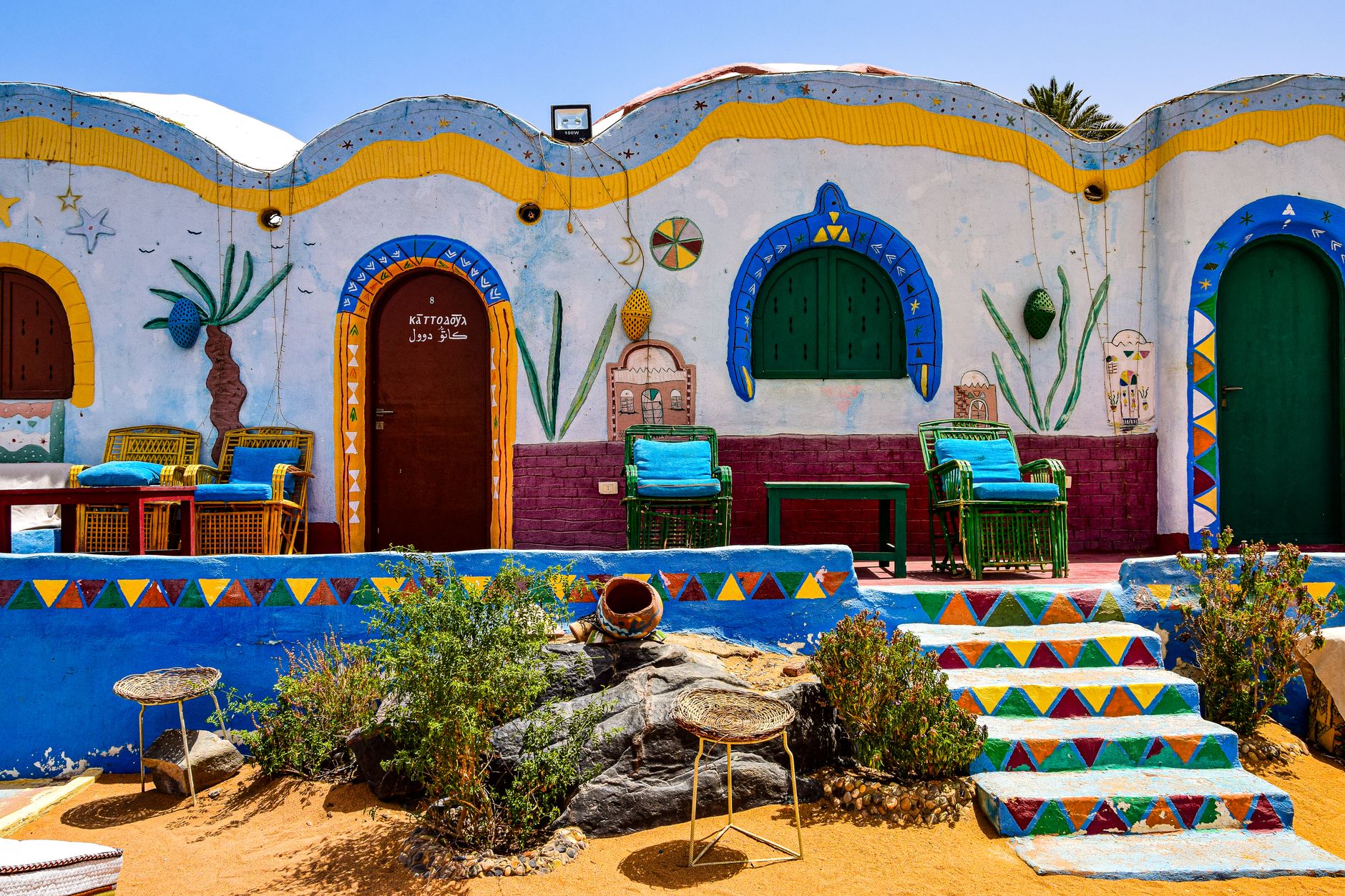 Nubian-style domed suite with terrace overlooking a walled garden and swimming pool
A four-day plan built around private guides, hotel pools and precisely 2 temples a day, with $2,000-3,500 per person as the honest cost.
What slow luxury actually means here
Slow luxury in Luxor is not a butler and a rose petal turndown. It is a private Egyptologist who has a doctorate, a driver who will wait as long as you like, a suite you can retreat to for four hours in the middle of the day, and the discipline to see two sites well rather than five sites badly. The four-day version of this trip runs $2,000-3,500 per person including a good hotel, private guiding both banks, one balloon flight and dinners you actually remember. It is what most first-time couples wish they had booked when they see how tired the group-tour people look.
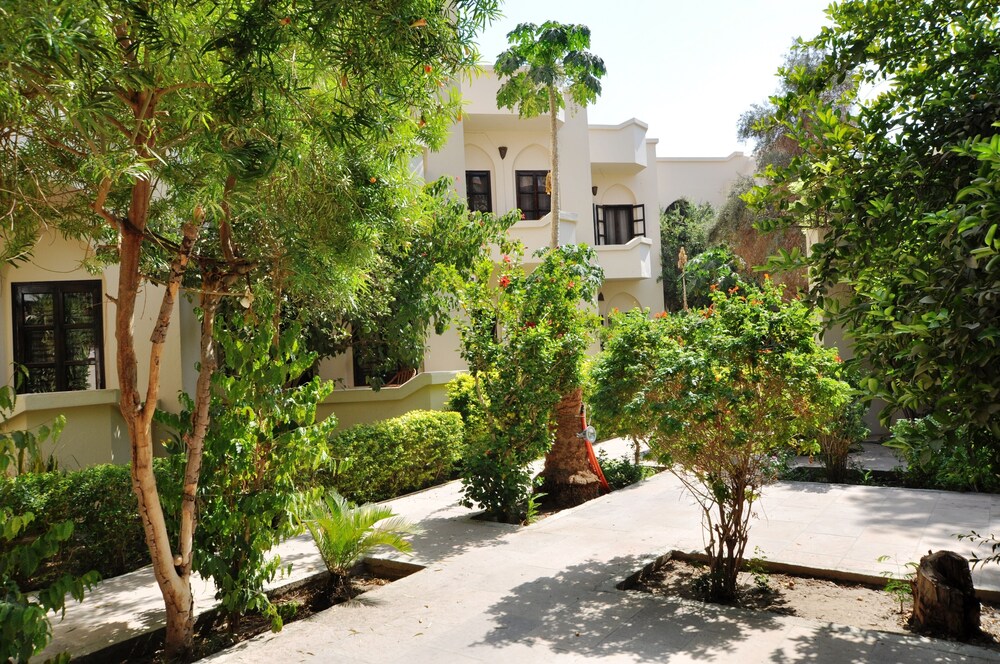
The structure is one night East Bank on arrival, two nights West Bank at Al Moudira Hotel, one final night back on the East Bank. The West Bank two nights is where the trip becomes distinctive; most luxury Luxor stays default to the Hilton or the Sonesta and skip the West Bank entirely. That is a mistake for anyone who wants the trip to feel like more than a series of temple stops. The Nubian domes and gardens at Al Moudira are a genuine hotel experience, not just a bed near the sites.
Day 1: arrive gently, own Luxor Temple at night
Airport transfer arranged in advance ($15-25 private car). Check into Sonesta St George Hotel Luxor or Hilton Luxor Resort & Spa around noon, lunch by the pool, three hours horizontal. This is the rule of slow luxury: you do not fight jet lag on day one by cramming Karnak. You lose to it. Instead you nap, you swim, and you save your first temple for the golden hour when you can actually see it.
At 5pm your guide meets you at the hotel and walks with you to Luxor Temple. Ninety minutes there while the light turns copper, then dinner at 1886 inside the Winter Palace, a colonial dining room that has hosted every kind of Egyptologist since Carter. Expect $60-80 a head with wine. Sleep by 10pm. You have done one temple, one great dinner and no rushing, and you are ahead of every group-tour visitor who is currently eating a buffet on a boat.
Day 2: Karnak private, then West Bank transfer
Guide picks you up at 6:45am for a 7am private entry to Karnak. Two hours in the hypostyle hall, the sacred lake, the outer courts of Mut, all at the pace you set. Back to the hotel by 9:30 for a real breakfast. Check out at 11, cross the Nile by hotel car and ferry (arranged and paid), arrive at Al Moudira by noon. Lunch in the garden restaurant under the tamarind trees ($25-35 for a set menu), then sleep or read in your suite until 5pm.
5pm: private car and guide to Medinat Habu, which is the West Bank temple most first-time visitors miss. Its outer walls carry battle reliefs from Ramesses III's war against the Sea Peoples, and the internal painted ceilings still hold pigment. Ninety minutes, coach parties long gone. Home to Al Moudira for dinner in the main dining room around 8pm. Expect $50-70 a head with wine. This is the point where the trip settles into its rhythm.
Day 3: the balloon and a long afternoon
4:15am wake-up, 4:45 hotel pickup, 5:15 balloon launch over the West Bank ($100-130 per person, book the top-end operator not the cheapest). Forty-five minutes in the air with the Ramesseum, Hatshepsut and the Colossi of Memnon spread beneath you. Land by 6:15, back at Al Moudira for a proper breakfast by 8. Then, and this is the key move, do not schedule anything else that morning. You have been up since 4am. Sleep until noon.
1pm: private guide for the Valley of the Kings at the awkward hour. This is counter-intuitive but it works: the cruise crowds land at 8-11am, so 1-3pm is quieter and the tombs stay a comfortable temperature. Three standard tombs plus Seti I ($55 extra) or Nefertari over in the Valley of the Queens ($60 extra). Home to Al Moudira for sunset from the pool terrace, dinner at 8. Bed by 10:30. You have done the balloon and the tombs and still had a four-hour afternoon in the room.
Day 4: Hatshepsut, Ramesseum, and back east
Early start again: 6:30 breakfast, 7:15 out the door, 7:30 at Hatshepsut's temple as it opens. Ninety minutes with the guide walking the three terraces. 9:30 at the Ramesseum for the fallen colossus and the ruined hypostyle. Back at Al Moudira for lunch by 12:30, check out at 2pm, cross the Nile, check into your final East Bank hotel. If you want another splurge, Hilton Luxor Resort & Spa at $200-260 is the pick; the pool complex is the best in Luxor and you have earned an afternoon in it.
Late afternoon: felucca sunset from the Corniche. Book privately for $30-40 for the boat, bring a bottle of wine from Al-Sahaby wine shop next to Sofra. Ninety minutes on the water, land by 6:30, walk to Sofra for a farewell dinner (mezze, molokhia, grilled quail, $15-20 a head). Bed by 10, airport in the morning. Four days, six sites done properly, three great meals, one balloon, zero moments of feeling rushed.
Where to sleep and what it costs
Al Moudira Hotel is the West Bank centrepiece at $180-260 a night depending on season. Book a garden suite; the domes and the private terrace are the point. Sonesta St George Hotel Luxor at $130-170 or Hilton Luxor Resort & Spa at $200-260 handle the East Bank bookends. If you want to skew even more towards East Bank luxury, Steigenberger Nile Palace at $110-150 is the value pick with river-facing rooms and a decent pool.
Private guiding runs $80-120 for a half-day, $150-200 for a full day, plus tip (10-15%). Airport transfers $15-25 each way. Private car for the West Bank days $60-80 a day with driver waiting. Site entries across the four days total about $220 with the extra tombs. Meals at hotel restaurants run $50-70 for dinner, $25-35 for lunch; street-level meals are far cheaper but do not fit the trip's brief. Total for two people, mid-luxury: about $4,500-5,500 for four nights excluding flights.
What this trip is not
This is not a five-star Nile cruise. If you want white-glove service on a boat with a fixed dining time and a shore excursion coordinator, book a cruise and stop reading. This is a private trip for people who have decided that hotel-based travel with hired specialists is more interesting than a curated schedule on water. Both are valid; they are just different trips. The mistake is booking a cruise when you actually wanted this, or vice versa.
This is also not for anyone who wants to see everything. You will not visit Dendera, Abydos, Esna or Edfu on this four-day plan. If those matter, extend by two days and add a driving day. What this plan buys you is depth: four days of Luxor proper, six sites walked slowly, a real hotel experience on each bank, and enough downtime to read a book. Most people who do this trip come back for a second one and add the outlying temples then.
Before you book
The questions people ask about East Bank, answered with this month’s numbers.
Yes, if you value setting and design over convenience. The hotel is 20 minutes from the West Bank sites, the food is the best on the West Bank, and the architecture (Nubian domes, hand-painted ceilings, tamarind gardens) is a genuine experience. If you just want a comfortable bed, Villa Al Diwan Luxor at half the price does the job.
Through the hotel for a first trip. The good hotels (Al Moudira, Sonesta, Hilton) have relationships with senior Egyptologists who charge $120-200 a day and are actually experts, not license-holders reading a script. Freelance guides through Corniche touts are cheaper but wildly variable in quality.
Drop day 4 and cross back to the East Bank on day 3 evening after the Valley of the Kings. You lose Hatshepsut and the Ramesseum, but you keep Karnak, Luxor Temple, Medinat Habu, the balloon, the Valley and one felucca sunset. Three days is a real plan, four days is a better one.